

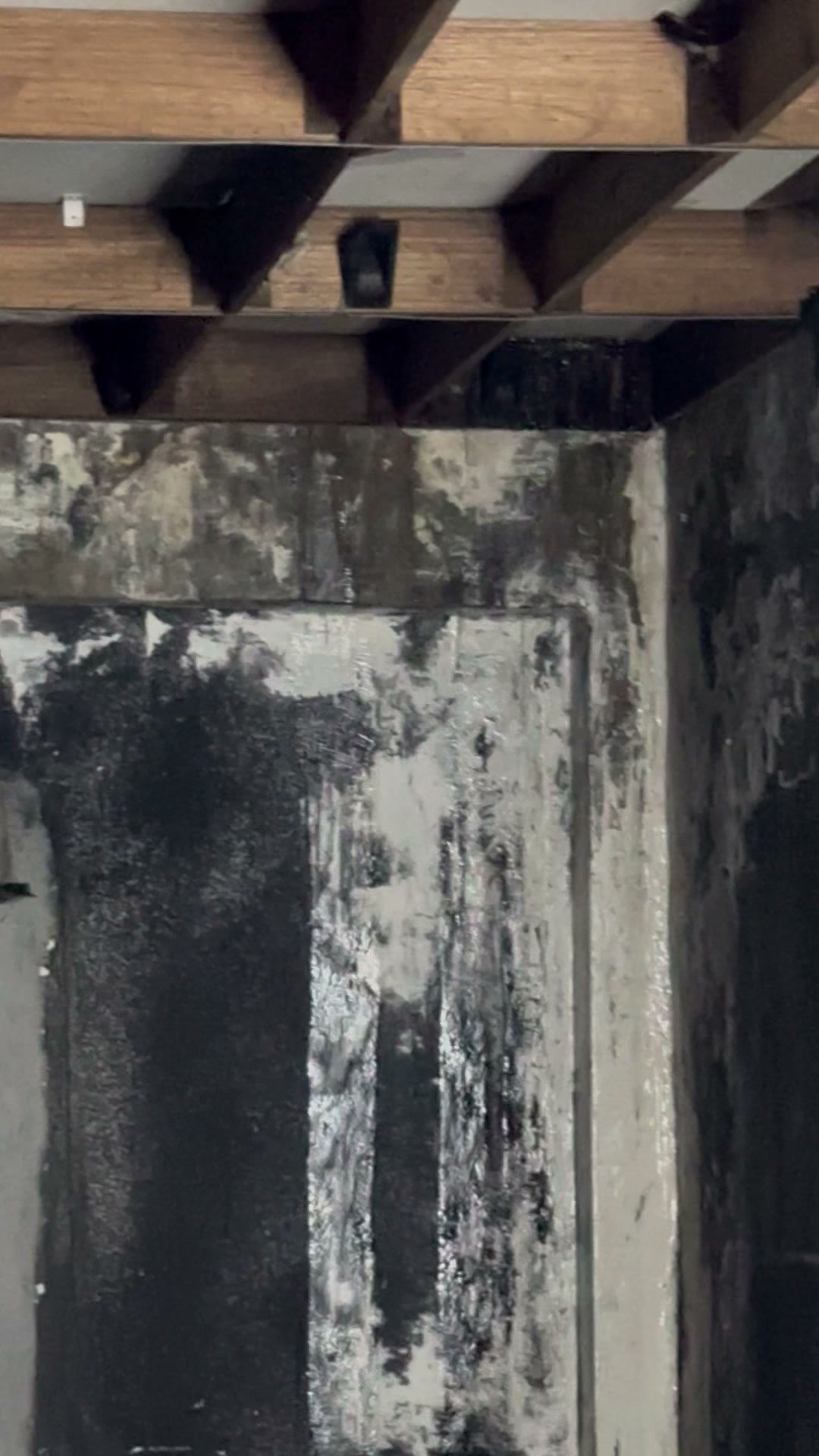
The rainy season ends, and production falls off a cliff.
The first thing many owners think is that the birds died of cold. Others say the environment has changed, or there are fewer insects outside now. Let me explain why you should look at damp instead, and what you can check inside the house while the mould is still too early to see.
What you are seeing
In a house that drops after the rains, the nests start to look dirty. They get black spots that will not wash off, and the colour turns strange and dull.
And one thing does not add up. The houses that drop the hardest are often the big ones with the most birds.
The common misreadings
1. “The birds died of cold.”
Young birds that cannot fly yet may die when it gets cold. But in a big house with a lot of birds, thousands of swiftlets packed into one building keep each other warm, and grown swiftlets do not die of cold that easily. Yet these are exactly the houses that drop the most after the rains.
So in this kind of house, the cold does not explain it. Look at the damp. A long spell of rain, or floodwater sitting around the building, fills the air with moisture. If the airflow inside is not under control, the nesting planks become the perfect place for mould to grow. Houses with fewer birds, or houses on high ground, are a different story when it comes to cold. I covered that in what to watch in your swiftlet house during the rainy season.
2. “The environment changed. There are fewer insects.”
Whether the insects outside have really dropped is something we tested ourselves, by paying to farm insects. It is in are there fewer swiftlets now.
3. “I haven’t run my misters for half a year. How can it still be damp?”
Someone really asked me this. His house was very damp and every plank had mould, but he had not switched on a mister for six months.
Moisture does not have to come from you. One cause is seepage. Water slowly soaks into the walls and stays there. In a house with double brick walls, a lot of water can sit between the two layers. An outer wall that was never plastered, where you can still see the brick pattern, soaks up water even more easily. What to check after a leak or a flood is in swiftlet house leaked or flooded? what to check afterwards.
4. “The planks look dry. Spray more water.”
In Cambodia I saw that people were misting a huge amount. It turned out the ventilation blocks were bringing in strong airflow, so the planks looked dry, and they kept spraying. With that much water, there is definitely mould on the planks. You will not always see it, and by the time you do, it is already serious.
5. “I see no mould on the planks, so there is none.”
Mould goes in three stages. First it is invisible. Then black spots appear on the nests and will not wash off. Finally, if nothing is done, the older birds slowly move out, and the young ones born in the house leave the nest and do not come back. The rainy season article goes through the stages.
What matters here is the first stage. When mould first grows, you cannot see it, but the birds can smell it and feel it. Not seeing it does not mean it is not there.
Before the mould shows, check these first
One thing first. A production drop can have more than one cause. A big drop in a short time can also mean a predator got in. How to read the signs it leaves is in swiftlet numbers dropped suddenly. What follows is the damp side.
1. Find where the water comes from. Is the roof or a wall leaking or seeping? The water you spray in yourself counts as a source too.
2. Check whether the moisture has a way out. Most people use an exhaust fan only to pull out heat. It can pull out moisture too. Moist air is heavy and sinks, so to remove moisture the fan has to sit low on the wall. Do not put it right at floor level, or it will suck up the dust and droppings from the floor and the air gets worse. This only works if the house is not leaking. A fan cannot keep up with a leak nobody fixed. How the different kinds of air move inside a house is in how airflow should work in a swiftlet house.

3. Go in during the day, after the birds have flown out, and look at the planks and nests. Compare the plank colour with how it looked before the rains. Is it darker? Are spots starting to show? Are the nests getting dirty, how many black spots, has the colour gone dull? Note which area is the dampest.
4. Do not wait until you can see it. What you want is to stop the mould from growing, not to deal with it after it has grown. If you wait until it shows and then try to put the fire out, some of your birds have already left.
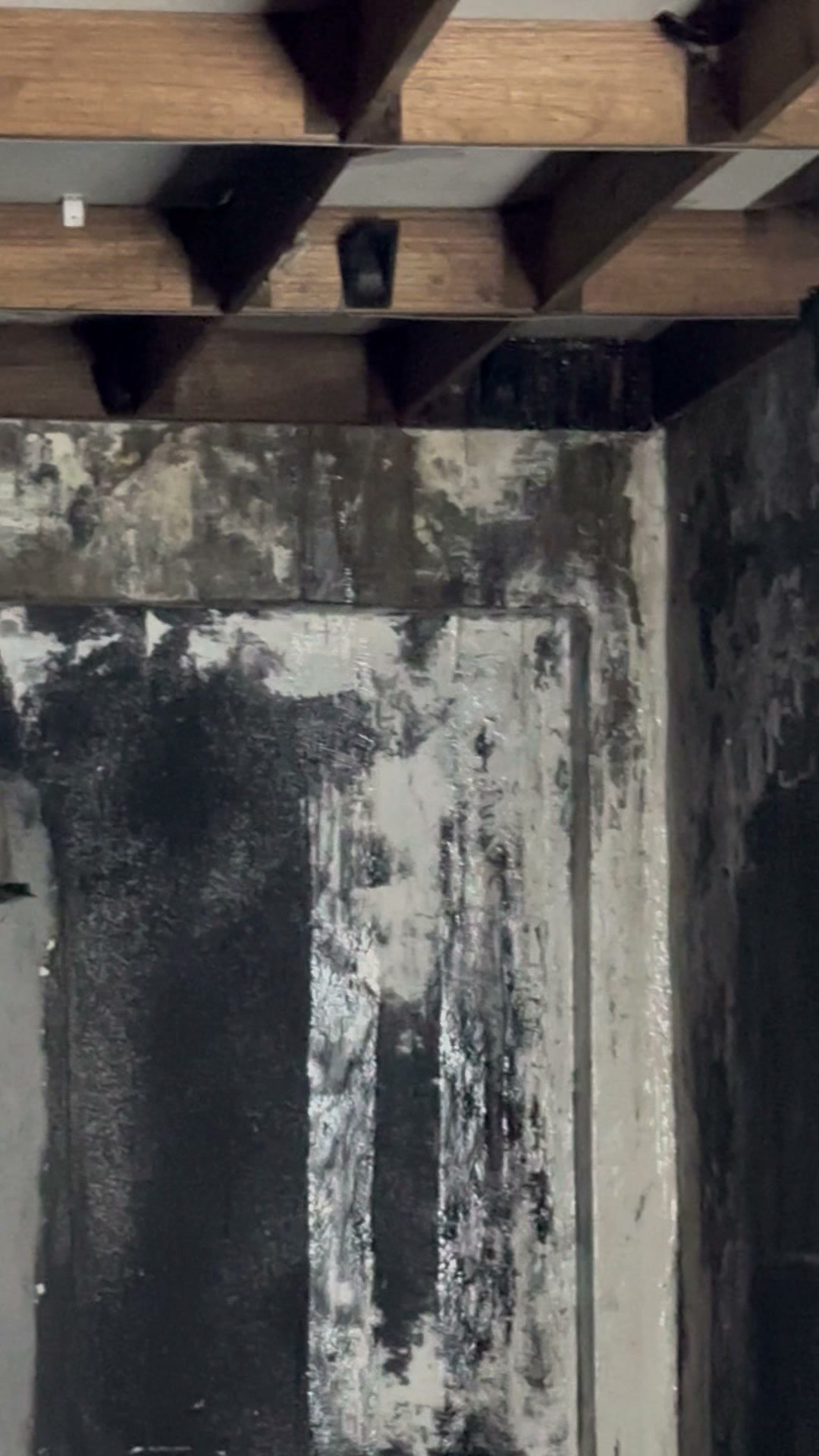
By the time you can see it, it often looks like this.
Only after these checks do you move to the next step. That is the order the MDK Swiftlet House Diagnosis Method follows. Diagnosis first, prescription second.
When it is time for a product
The planks need regular treatment, whether or not your house has a leak or seepage. We use our own Meranti+ Nesting Plank Enhancer. Normally once every three to six months. In the rainy season, shorten that to about every two months. New planks that are not up yet, spray them before you fix them in place. It saves you a rescue later.
Your next step
Pick a day, and after the birds have flown out, film your way in from the entrance hole on your phone, talking as you go, and record the internal sound and then the external sound. When you reach the dampest area, get a clear shot of the darkest planks and the nests with black spots. Show where the exhaust fan and the vents are too.
Send the video to us on WhatsApp. We will look at it and tell you whether your house is stuck on water, on airflow or on the planks after the rains, and which one to fix first.