

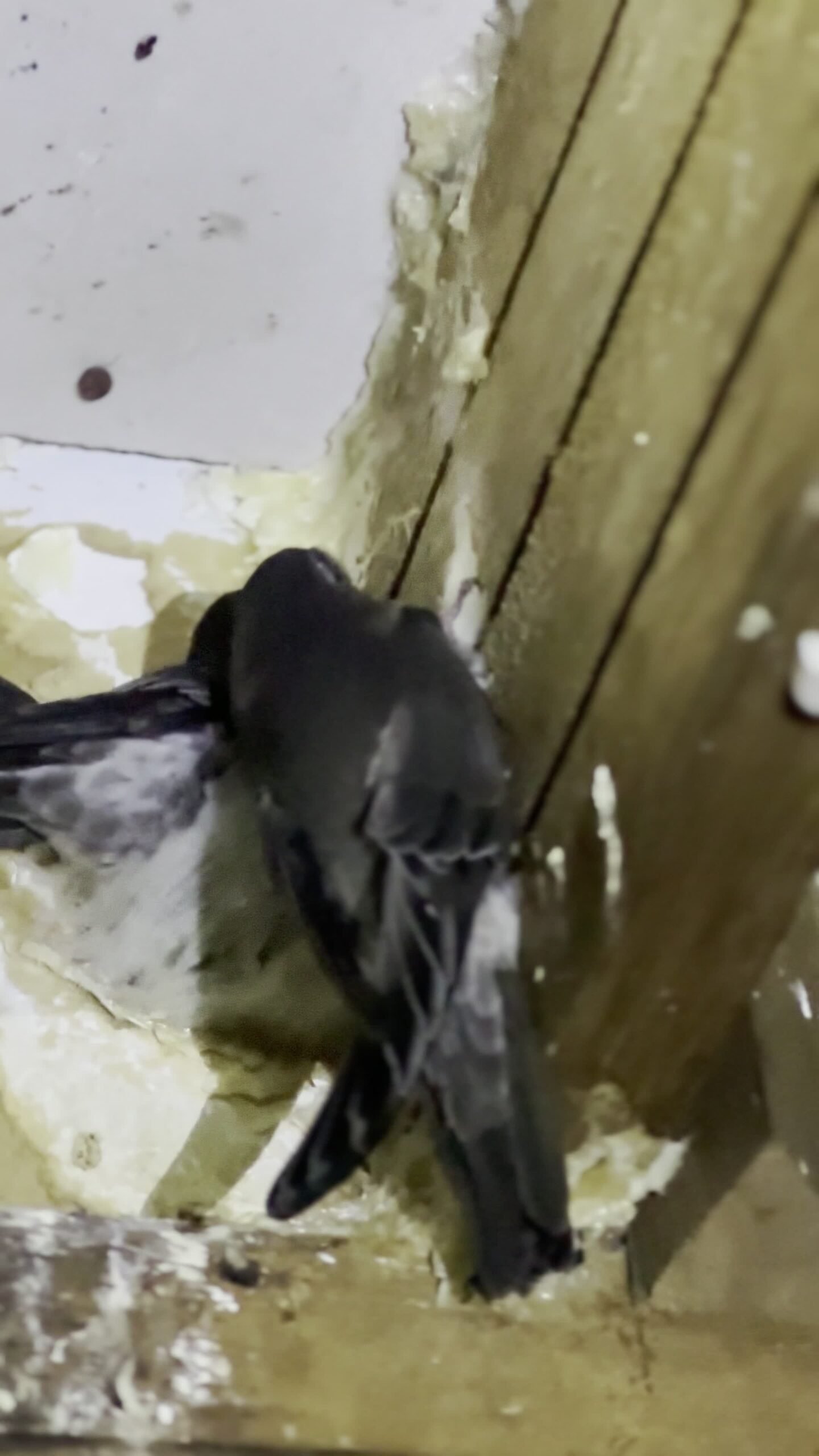
First, what this post means by chick sound. In this trade, chick sound is the call of chicks: young swiftlets that are still in the nest and cannot fly yet.
Does that call help? Yes. It is one part of what your internal sound should have.
But “it helps” and “add it and you get more birds” are a long way apart. This post is about the space in between.
Why internal sound needs chick calls
A house that swiftlets live in never has birds of only one age. There are chicks, there are about-to-fly birds, and there are adult birds.
The job of internal sound is to get the birds that come in to stay. So internal sound needs a mix: chicks, about-to-fly birds and adults, all calling. Birds of different ages heard together is what gets a swiftlet thinking about pairing up, and that is when it settles.
Chick calls have their share in that. They are one layer, sitting in the same internal track as the older birds.
When it is almost all chicks, what goes missing
Turn it around. If an internal track is chick calls from start to finish, the about-to-fly and adult layers are gone. The mix described above just does not happen.
There is a tweeter side to this as well. Kiew Meng Kui, my co-teacher on the Swiftlet Signature Masterclass (SSM), has a word for this: realness. His point: with many tweeters, one chick call comes out of every tweeter as the same chick call, and one about-to-fly call comes out everywhere as the same call. What he wants is the realness of the sound birds make by themselves.
He said that about houses with many tweeters. Too many tweeters cause another problem too, which I covered in Where should tweeters go in a swiftlet house?
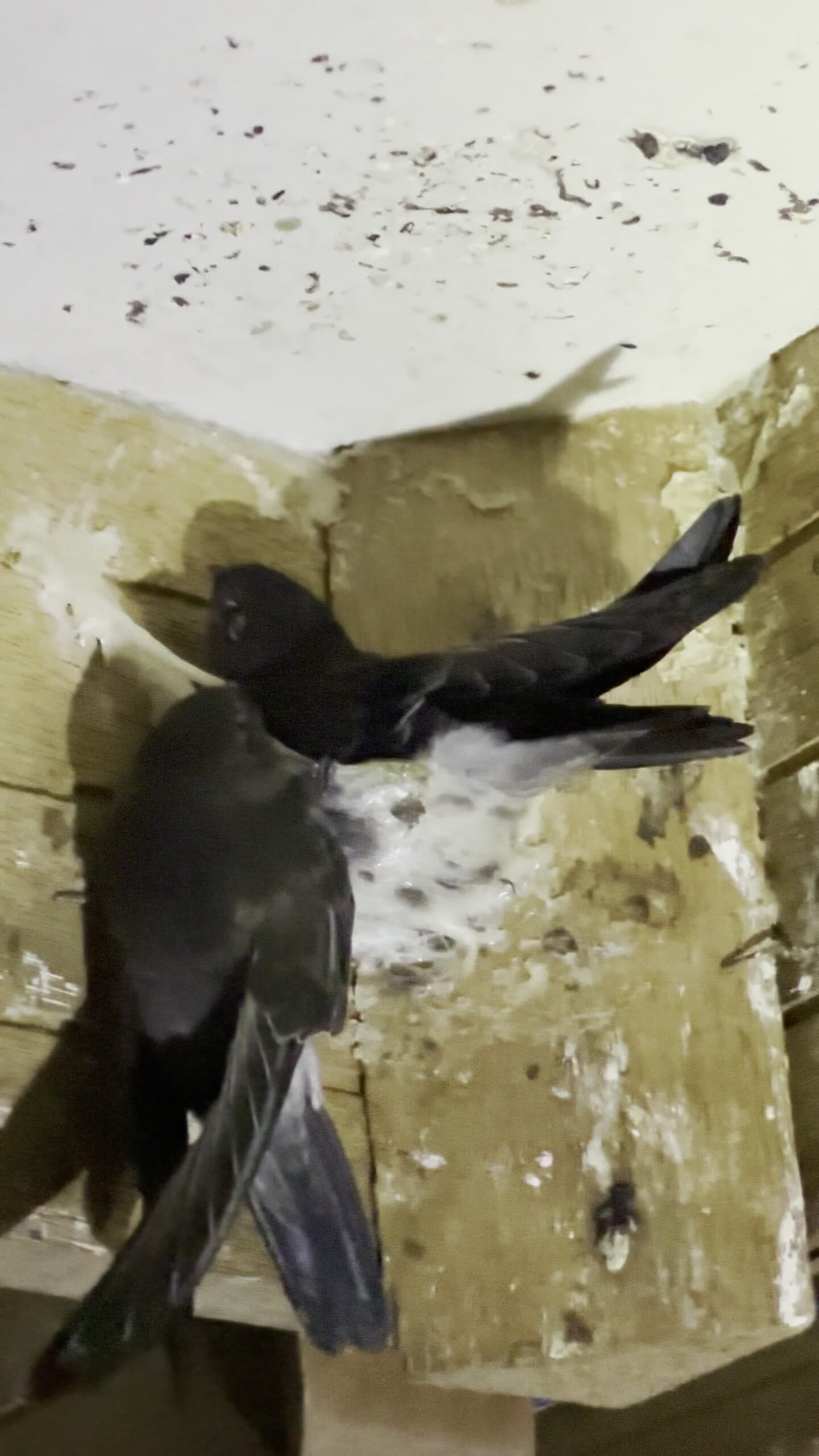
Thinking of a new track with chick calls to pull birds in?
Wanting chick calls in your sound often ends up as a sound change.
On changing sound, I have to own something first. Years ago, I was the one telling people to change. My 2012 book says to change the external sound every two days to a week so the birds do not lose interest, and I was selling an automatic sound changer.
What I say today is different: keep changing, and in the end the birds ignore whatever you play. Why I changed my mind fits in one line: if changing the sound could add birds, there would be no failed swiftlet houses in the world.
That does not mean never change. You do change, but timing matters more than how often. When it is time to change, and what to check in the house before you do, is in How to tell if your swiftlet sound is good.
Once the house has birds
More internal sound is not always better either. When the house has plenty of birds, you can pick a stretch of time and switch the internal sound off, so the birds call and talk among themselves. Playing to them from morning to night is not the reason they stay. When to switch off, and which stretch, is in External sound vs internal sound in a swiftlet house.
The common mistake: thinking a missing call is the problem
Birds do not come, or they come and do not stay. If your first thought is “my sound needs more chick calls”, stop there for a moment.
Problems in a swiftlet house come in an order. At the entrance hole, the level line, the angle and the light coming in decide things. Until swiftlets can fly in smoothly, airflow, temperature, humidity and sound behind it cannot help, however well they are set. Once the entrance is right, check whether the flight path is smooth and whether the nesting planks have aged. Sound comes after all of that.
Kiew Meng Kui says it again and again: sound can pull birds in, but they come and do not stay. He went through a round of different sounds himself, a whole year of trying, and his house did not grow. Production dropped.
So if birds circle outside and do not go in, no amount of chick calls inside reaches that part. Read Swiftlets circling the entrance but not going in first.
Even when it really is the sound, a missing call is not the only suspect. Is the sound cracked? Is it hitting a wall and bouncing back? Are the machine and the tweeters a proper match? Those are covered in Is louder swiftlet sound better? and How to tell if your swiftlet sound is good.
Which layer the house is stuck at is easy to miss when you look on your own.
When is it time to touch the internal sound?
How chick, about-to-fly and adult calls are balanced inside one internal track is taught as a full system in the course, so I will not go into it here.
What to remember is the order: deal with the entrance and the inside of the house first, internal sound after. If the house is not ready, the calls can be as well mixed as you like, and the birds that come in still cannot stay.
Next step
Tell us about your sound now: which internal track you play, whether chick calls were ever added, and where you got it.
Then go in during the day, after the swiftlets have flown out. Film your way in from the entrance hole on your phone, talking as you go, and record the internal sound and then the external sound.
Send it all to our WhatsApp at once. We will go through it with the MDK Swiftlet House Diagnosis Method and tell you whether the house is stuck at the entrance, somewhere inside, or really at the sound. If we need more after that, we will ask. You do not have to get everything ready in one go. Diagnosis first, prescription second.
We also give out free external sound at the moment, just ask. But sound is not a cure-all. If the house is stuck at the entrance hole or the flight path, a new sound only brings a few lively days. So when you ask for the sound, send the video along with it.