

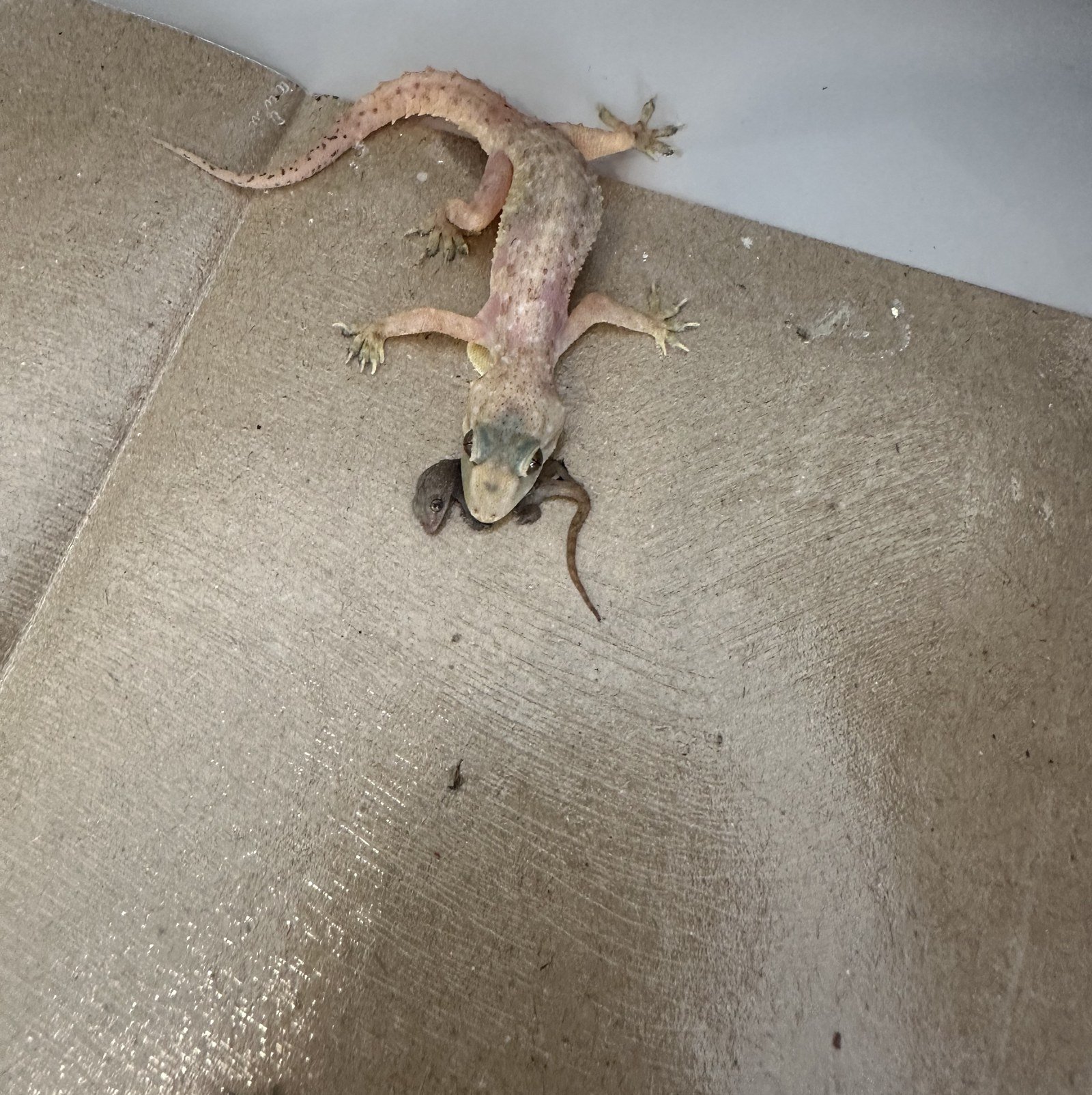
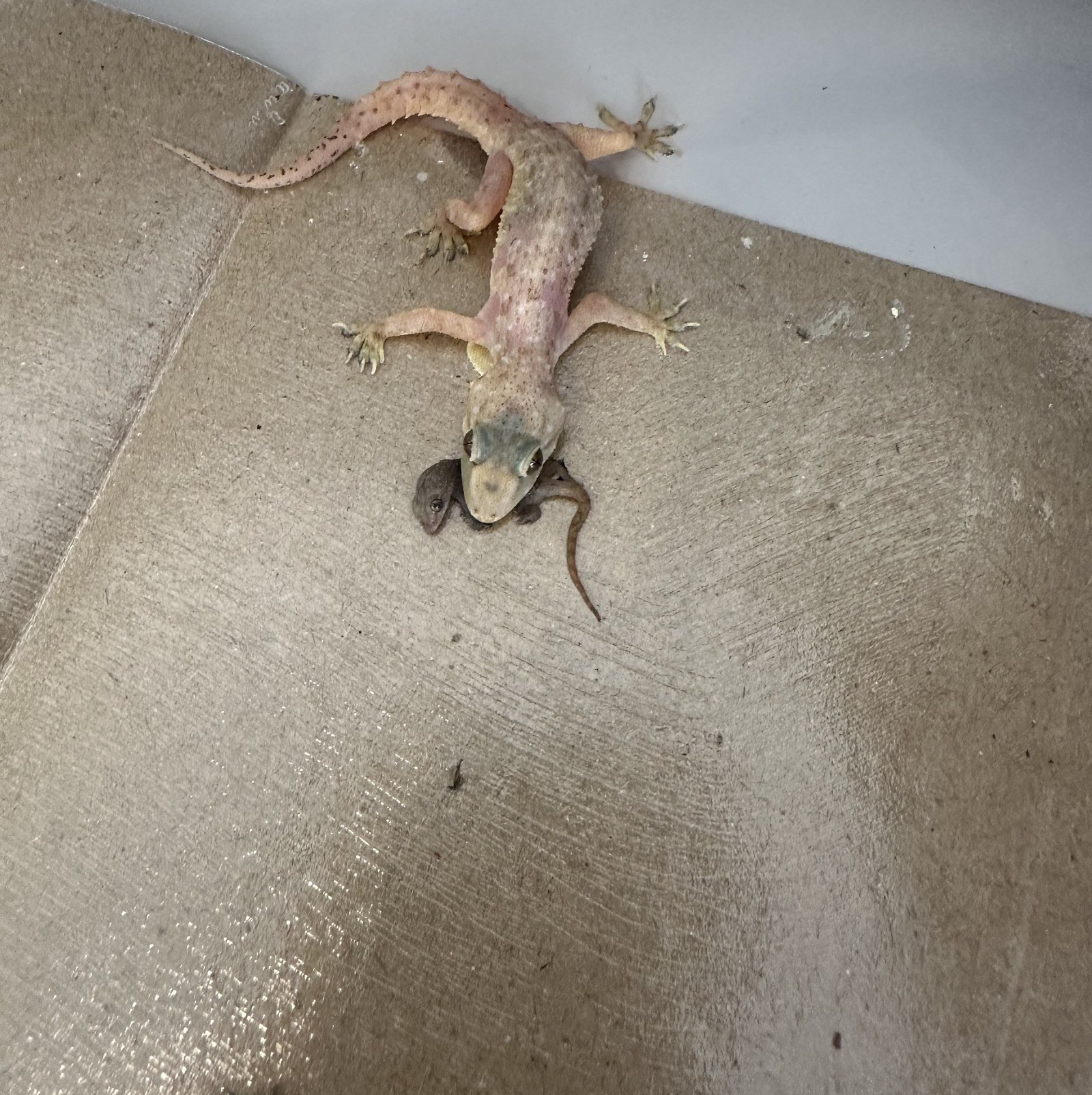
If you see one big gecko in your swiftlet house, there is a good chance there is a second one, and a third. It is the same as seeing one cockroach in your kitchen.
Geckos steal eggs and climb the planks, and the birds get unsettled. But more than one kind of climber gets into a swiftlet house, and they are not handled the same way. For two of them the methods are the exact opposite. So the first job is to work out which one you have.
Work out which one it is
Small geckos.
They steal eggs and climb the nesting planks. Look in the nests and you find the egg still there, but empty inside. It has been sucked dry through one small hole.
Big geckos (tokek).
You see them more in the countryside, sometimes in town too. They can climb any wall, and one of them can eat a lot of chicks that cannot feed themselves yet. It usually does not stay in the swiftlet house. It eats and it leaves.
Monitor lizards.
What they want is the whole building, not one corner.
Small geckos and monitor lizards are handled in opposite ways, which I will get to below. Big geckos are harder. I will be straight with you about that further down.
Where people go wrong
One: “I have never seen any of this in my house, so it is not my problem.”
Your house has been running for years, it has plenty of nests, and no predator has ever come. Does that mean you do not need to worry?
Once the birds build up, predators follow, and even more so if your house is out in the countryside. If your house is on the low side, watch the ones that climb up, and lizards are on that list.
Two: “We lost a lot of nests overnight, but there is no sign of anything.”
Not every predator leaves a sign. Rats leave droppings and feathers. Some leave nothing. A big gecko eats and goes, so by the time you walk in it is long gone. Monitor lizards and musang (civets) are also common. Even with CCTV, the camera may not catch it, and when it does, nobody may look at the footage. So no sign is not proof that nothing came in.
Three: “My high voltage broke down within a few months.”
Look at how it was installed first. If the wire touches cement, wood, a wall or the floor, it shorts. Wet wood conducts too. When the indicator light stays on as if it is zapping something, but you go in and find nothing, the wire is usually touching something it should not. Run like that for long and the machine burns out.
How to check
If you go in, go during the day, after the birds have flown out.
One: look at the eggs.
Where there are eggs, check for the ones that are still whole but empty, with one small hole.
Two: think about how the nests went down.
If a big batch went missing all at once and you cannot find any sign, count predators in, and put big geckos and monitor lizards on the list. If you have CCTV, go back through the footage from those days.
Three: find where it climbs up.
Predators pick the easy places to climb, and a wall corner where two walls meet at a right angle is the usual one. This is much the same route snakes and rats take, which I covered in snake in your swiftlet house, so I will not repeat it here.
If what you find on the floor is a pile of feathers, that is a different kind of predator. Read feathers on the swiftlet house floor first to tell them apart.
When equipment comes in
Only after you know which one it is do we talk about what to use.
Small geckos: let them come to you.
You do not need to chase them around the house. They have regular paths. Put the high voltage on that path, and when one passes and touches it, that is the end of it. The other way is gecko bait: add a little water and put it in a small dish by the wall where they usually pass. When it dries, add a bit more water and stir, and it works again. These are the two I use myself, and as I have said in my posts, they do not poison the chicks.
Monitor lizards: block the whole wall.
You cannot lure them. You have to fence off the entire wall so they cannot climb up. What you block has to be the whole face, not one point.
Big geckos: aluminium and tiles do not stop all of them.
We have tried smooth aluminium and tiles on the wall, and a few still got up. So even after you put them on, keep checking.
Corners and high voltage.
Most predators climb up at the corners, so put small traps at every corner, not just one or two. They catch geckos too. Be careful you do not step on one yourself, and put something in front of it. Put the high voltage on the outside. Anything installed inside is already too late, because the predator is already in. Where the wire would touch cement or wood, keep it off with ceramic insulators. Do not use plastic connectors, they melt once the power is on.
Which of these your house needs, and where to start, depends on which one it is and where it is coming up. Every house is different. We work it out with the MDK Swiftlet House Diagnosis Method, and the rule there is simple: diagnosis first, prescription second.
What to do this week
Pick a day, wait until the birds have flown out, and take photos of these: any eggs that were sucked dry, the spot where you saw the gecko or lizard, the corners inside that are easiest to climb, and where the high voltage wire runs. If you have CCTV, grab a few screenshots too.
Send them to us on WhatsApp. We look at photos for free. We will tell you which one it is, where it is coming up, and what to deal with first.