

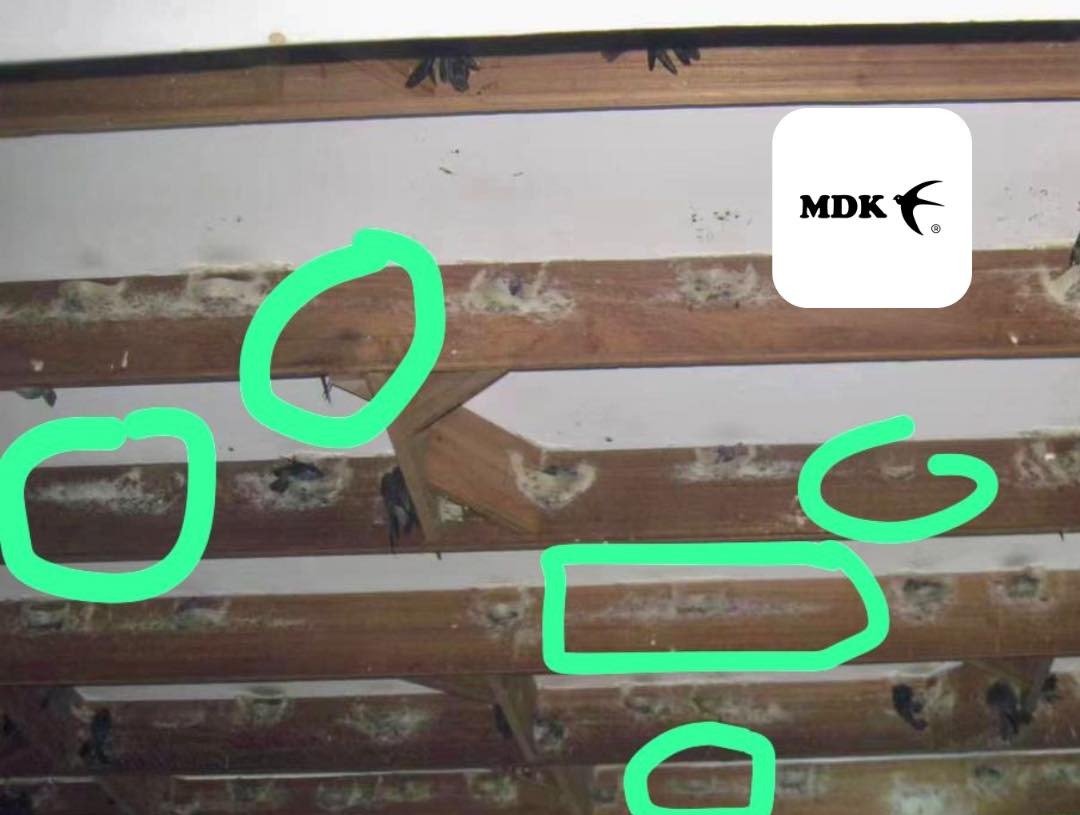
A swiftlet comes into your house and leaves a few strands of nest on the plank. The moment you see it, you think: it is going to stay.
A few days later you go up and look. Same strands, nothing added. The bird is gone and the nest has not grown. Later a few new strands show up at another spot nearby, and those stop too. In the end the bird settles somewhere else.
You might think swiftlets are just like that, hard to read. We see it differently. Very often, this has to do with the air moving inside your house.
What you are seeing
A few strands on the plank. You come back days later and it is still those few strands. There might be a few more nearby, stopped at the same point.
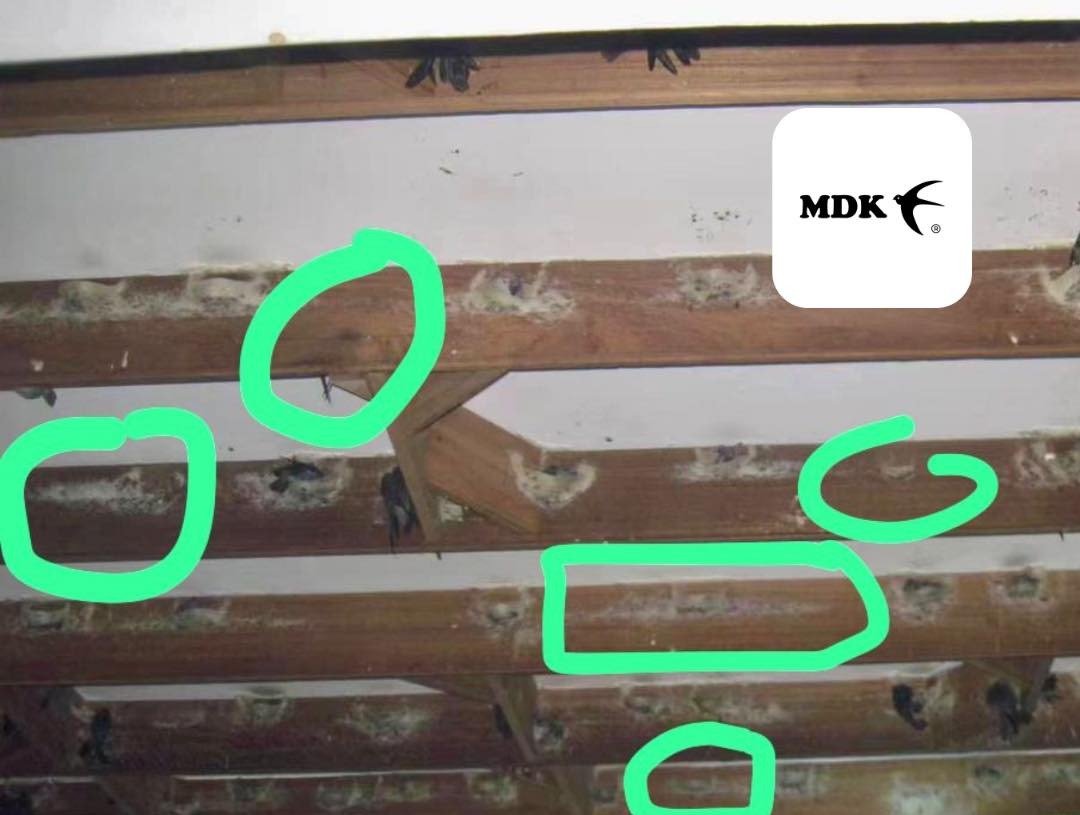
First, separate this from something else. If your house already has plenty of nests, some just starting, some halfway, some with eggs, that mix of long and short is a good sign. It means new birds keep joining. I covered that in signs swiftlets are about to nest.
This post is about the other case. The strands go down, they stay exactly like that, and the bird is no longer there.
It started, so it accepted the place
A swiftlet that starts laying strands has accepted the environment. It planned to stay.
So why stop? Look at those few days in between. If an unstable, strong draught suddenly pushes in, a spot that felt comfortable is no longer safe. When air blows straight onto the bird, it does not feel safe, so it moves.
Airflow is the thing people overlook the most, but it is a key part of whether a swiftlet stays or goes.
Put another way: not seeing it does not mean it is not there. What you can see is the result. The strands stopped, the bird left. What you cannot see is how the air moved through your house during those days. This is how we read it: those few strands are a marker, pointing at a spot where something in the house is not right.
Common mistakes
One, calling it luck. Swiftlets come and go, so nothing gets checked. Without the reason, the next time you see the same thing, you are still guessing.
Two, thinking more air is always better. Every vent opened to the maximum, and the birds get blown straight out.
Three, the opposite, sealing everything. Vents closed up to keep the house warm, and then the birds stop coming at all.
Four, fitting a system made for people. Automatic fresh air, automatic temperature control. It sounds advanced, but it is built around what people need, and swiftlets have no use for it.
Too strong is wrong, too weak is wrong. What the house needs is airflow that has been designed. The types of air movement inside a house are in swiftlet house ventilation.
How to check
Those stopped strands are not a failure. Treat them as markers.
1. Find every spot. In the daytime, after the swiftlets have flown out, go in and find each spot that has a few strands and nothing more. Photograph them. Do not stop at one. Get all of them. For each one, note the floor, the room and the wall, or you will not know which photo is which when you look back.
2. Look at them together. This is how we like to read this problem: which wall the spots are on, which row of planks, and what openings are close by. One spot alone tells you very little. All of them side by side make it easier to see where the air might be coming from.
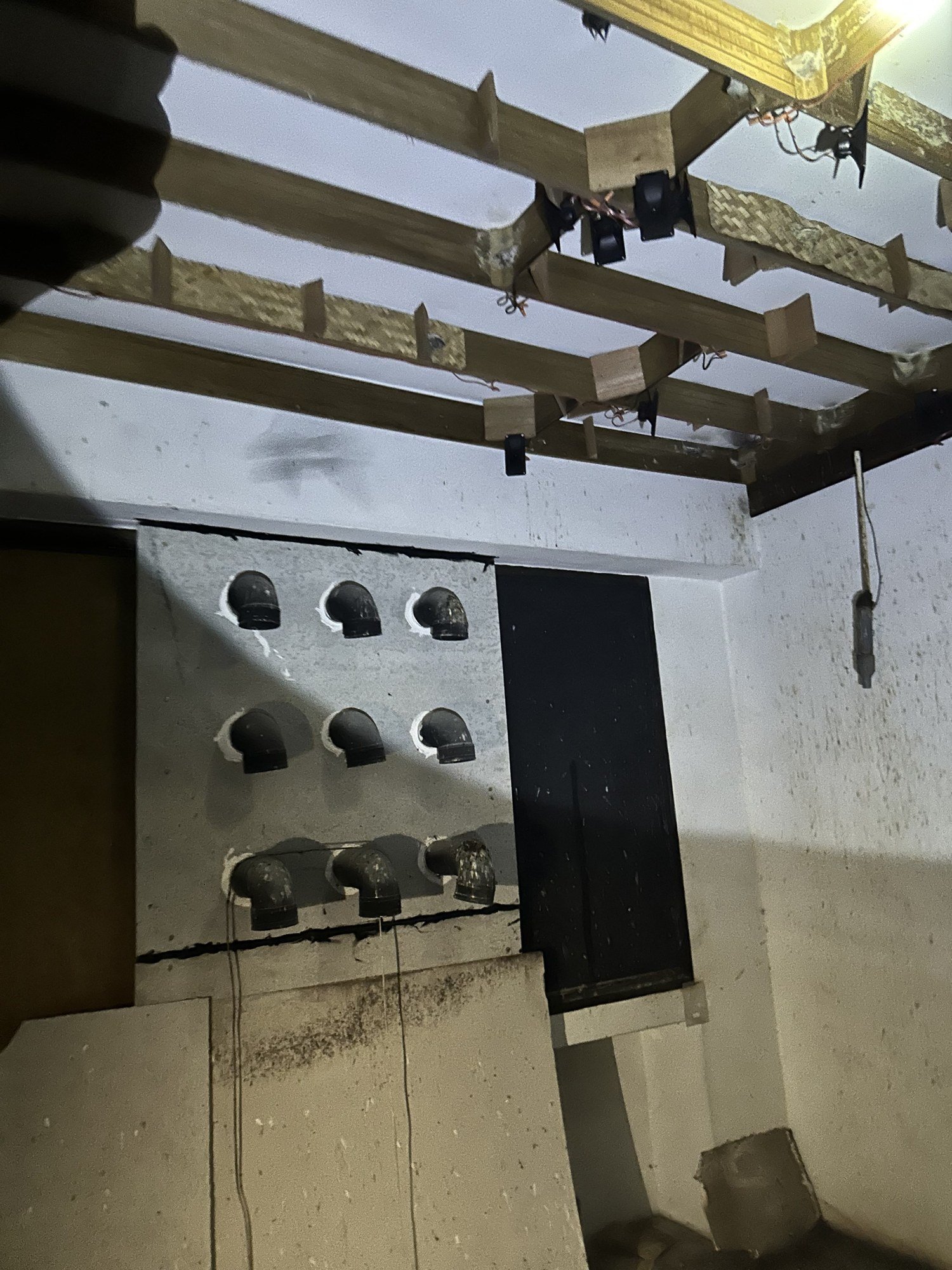
3. Photograph the openings nearby too. The air intake, the ventilation pipes, the second entrance (the second door that birds will pass through in your bird house), the third entrance, the openings in your partitions, and the layout of the rooms. Together these decide whether a bird feels comfortable and safe once it is inside. Look at only one of them and it is easy to read it wrong.
4. Do not rush to close or open anything. Every house has its own layout, its own number of birds, its own location. Where someone else opened a vent may not suit your house. That goes for your own other house that is doing well, too. Take the photos and let us look at it together first.
When equipment comes in
Exhaust fans, fresh-air systems, extra vents. These are all ways of changing things. Before you change anything, you need to know which part of the air in your house has gone wrong.
That is the order in the MDK Swiftlet House Diagnosis Method: Diagnosis first, prescription second. Once you can see where the air comes from and where it hits, then you decide what to change, whether to add anything, and what.
Your next step
Pick a day and go in during the daytime, after the swiftlets have flown out. Film your way in from the entrance hole on your phone, talking as you go. When you reach a spot with only a few strands, stop and film it clearly, then get the vents, the ventilation pipes and the second entrance near it into the shot. Then record the internal sound and then the external sound. If you have CCTV, cut a short clip of those spots and send it too. If you do not have it, that is fine.
Send it to us on WhatsApp, free. We will tell you whether those stopped strands look like an airflow problem, and where the air is coming from. If we need more information after that, we will ask. You do not need to prepare everything at once.