

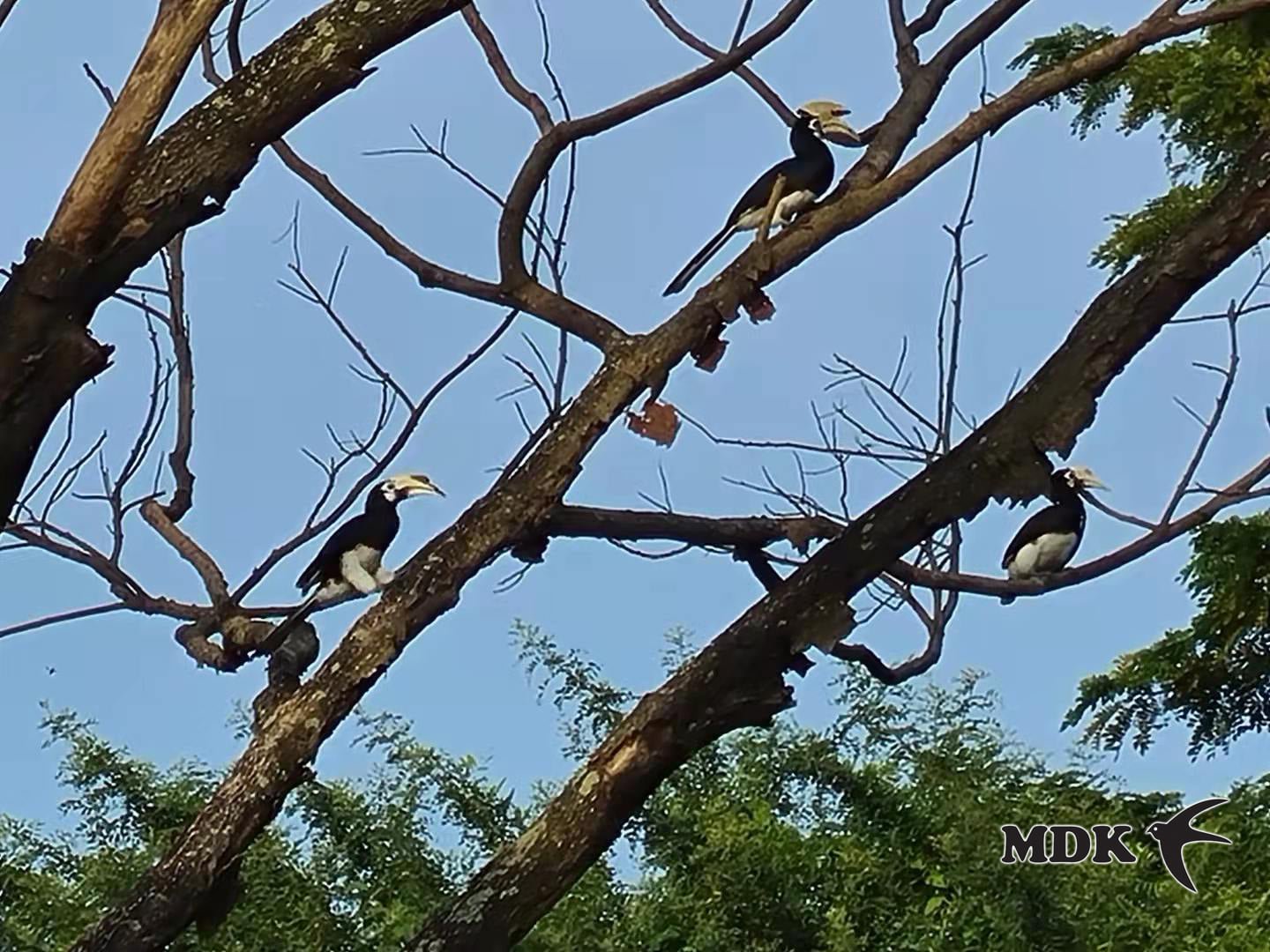
There are other birds standing near your entrance hole. Maybe a squirrel running along the roof. They do not go inside the house, so does it matter?
Back in 2021 I wrote one line about this. A bird that hunts swiftlets, or a bird with no attacking habit at all, pigeons included: if it gets the chance to stand at your entrance hole or close to it, it may affect how your swiftlet house grows.
This post is that line, explained properly.
What turns up outside the entrance hole
Hornbills and other big birds. A hornbill eats almost anything: fruit, insects, small birds. It will stand on the roof or near the entrance hole and catch the swiftlets that come close to the hole. A swiftlet has a small body, so it is a target for a lot of predators, especially the young ones that cannot fly well yet.
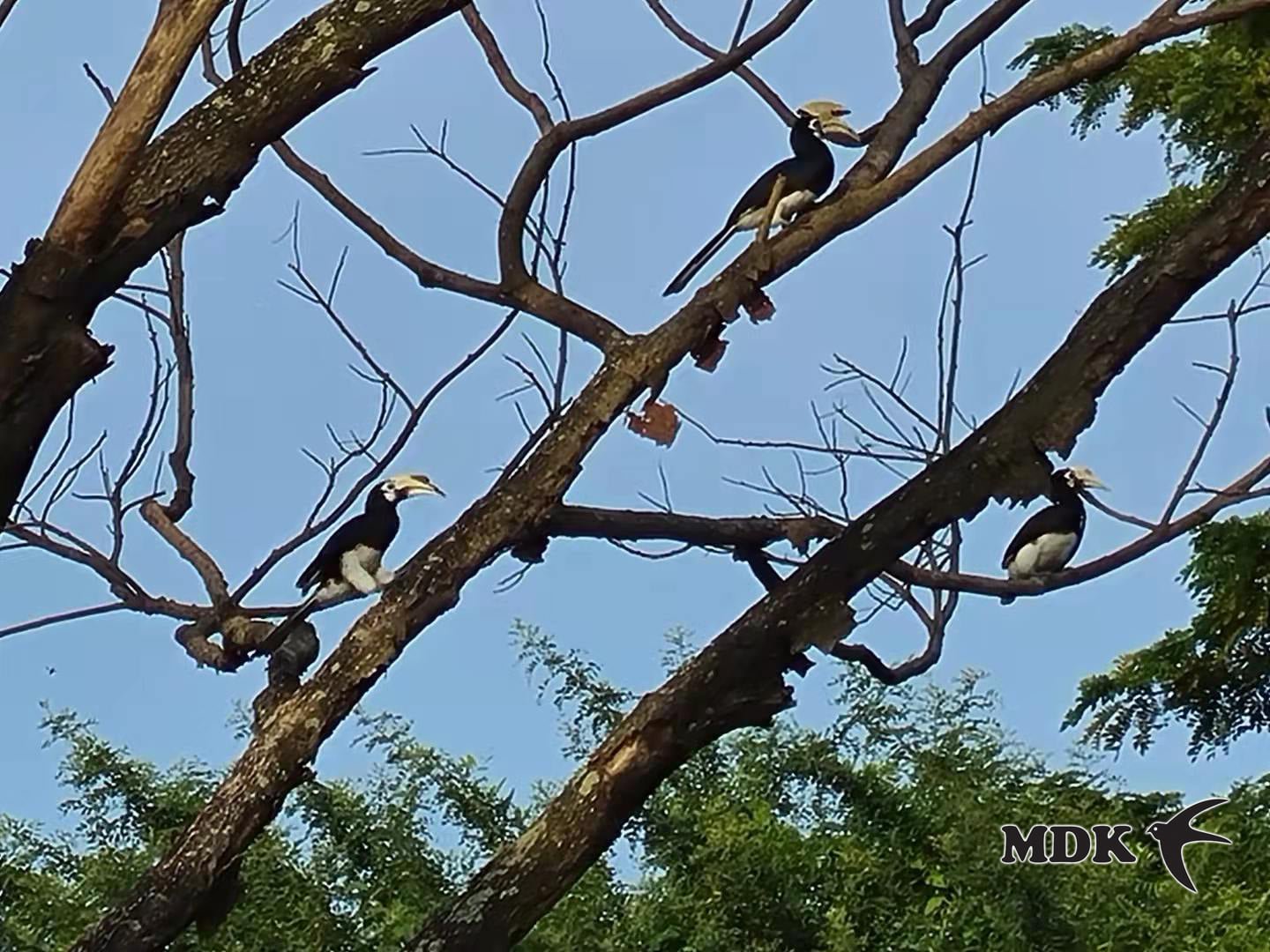
Other birds in the trees. Some birds just wait in a tree outside the entrance hole. When the swiftlets come home, they fly out and attack. For this kind, the answer is to give them nowhere to stand, with small traps set outside the house.
Pigeons. No attacking habit. But if a pigeon gets the chance to stand at the entrance hole or near it, it counts too.
Squirrels. Now and then a squirrel changes its menu and takes an egg or a chick. I covered squirrels in swiftlet numbers dropped suddenly, so I will not repeat it here.
It does not eat swiftlets, so why bother?
Honestly, asking whether it eats swiftlets only gets you half the answer. The ones that hunt swiftlets, of course you deal with. But a pigeon, with no attacking habit at all, may still affect how the house grows if it can stand at your entrance hole or near it.
So the real question is simple. Can it stand there? If it can, you need a way to stop it standing there.
Why catching and releasing pigeons does not work
A lot of owners catch a pigeon and drive it far away to let it go. Everybody gets this one wrong. It flies back. Even if that one does not, other pigeons keep coming.
Pigeons pass information to each other. What you need to change is how the whole group sees your house, so that they decide it is not a place to land. Chasing them away one by one never ends. Exactly what to do and where to put it depends on your entrance hole and where they land.
First, look at where they stand
1. Photograph where they land. At the entrance hole and around it, if something is standing there, take a photo and send it to us. We will tell you whether the entrance hole itself is simply too easy to land on.
2. Birds keep dropping and you do not know why? Put in CCTV. A friend of mine was losing birds fast and had no idea why. After he put in CCTV, he saw a civet coming to the entrance hole every night and taking young swiftlets. He put high voltage at the entrance hole straight away, and after that the civet was not seen again.
3. Still building? Put this into the design now. Which spots at the entrance hole and around it would let other birds or animals stand there, think about it while the house is being built.
When it is time for equipment
These are the options I have talked about in my posts. Each has its trade off:
- High voltage. For keeping other birds and predators off, I think the best tool is high voltage used properly. Fitted correctly, it takes care of most of your predator problems, and it saves time because you do not have to keep going back to check.
- Pointed metal spikes. They stop other birds from standing, but they do not do much against other predators.
- Small traps at the entrance hole stop predators from standing there, but somebody has to go and check that they still work.
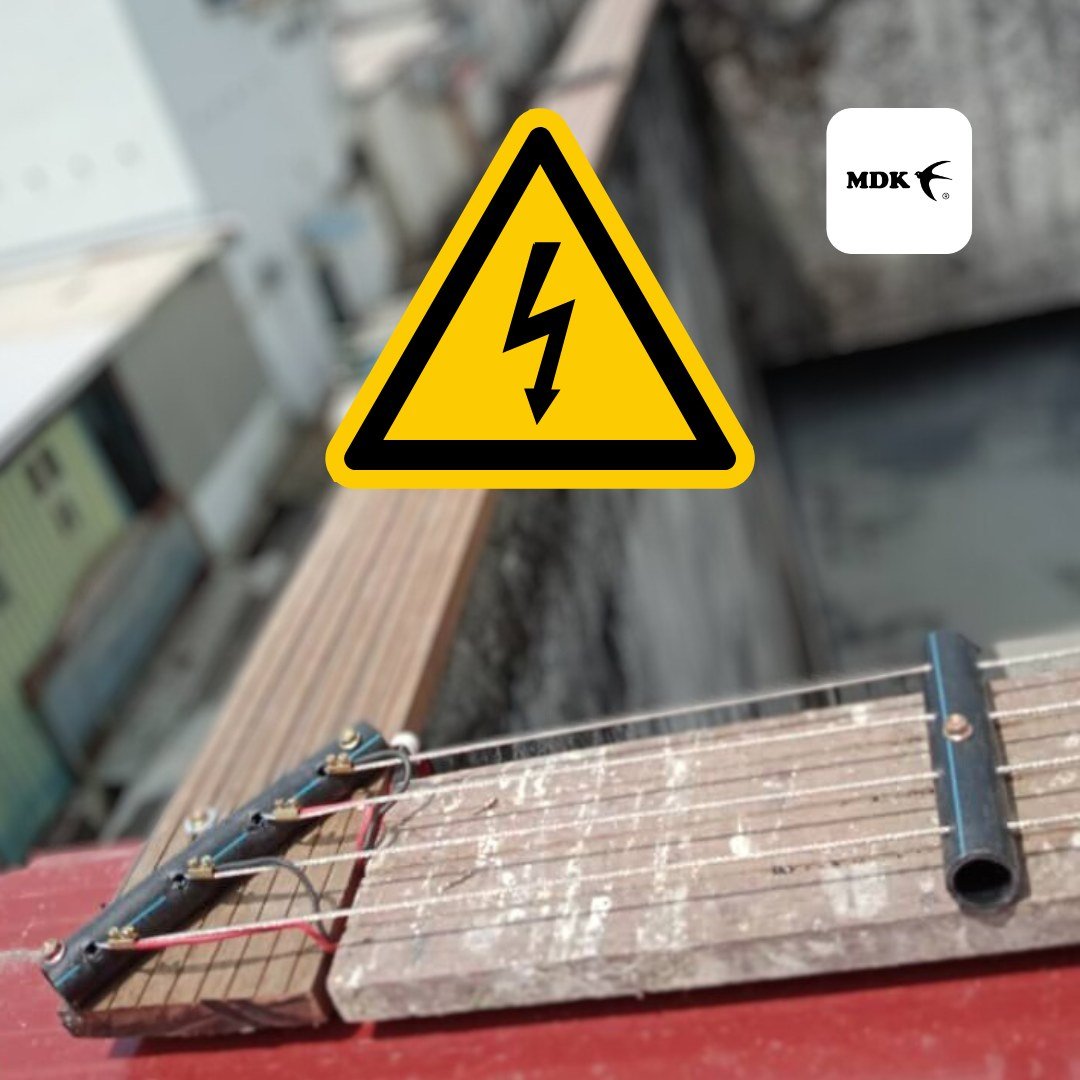
Three things to know about high voltage:
Put it outside, not inside. Inside is already too late, because by then the predator is already in. Outside is where it cuts the damage a lot. On the roof or on the outside of the house, rain will not break it, as long as it is installed properly.
Higher voltage is not better. Too high and it shorts and trips more easily. When the air is humid, the current can jump across without anything touching it. The transformer breaks more easily too, and it does not last. Too much current can even start a fire.
The contact light stays on but nothing is being shocked? That means a wire is touching cement, wood or a wall. Separate it at that spot with ceramic insulators.
Owls are a different story. With an owl, do not let it get a foothold even the first time. See owl in your swiftlet house.
Which option to use and where to put it depends on who is standing at your entrance hole and exactly where. That is the same order as the MDK Swiftlet House Diagnosis Method: Diagnosis first, prescription second. Look properly first, then decide what to fit.
What to do next
Pick a day and go in the daytime. First, from outside, take clear photos of the entrance hole and the area around it. If something is standing there, photograph it.
Then wait until the swiftlets have flown out. Film your way in from the entrance hole on your phone, talking as you go, and record the internal sound and then the external sound. If you have CCTV, clip the parts where something shows up at the entrance hole.
Send it all to our WhatsApp. It is free. We will tell you what it is, where it stands, and which spot to block first. If we need more after that, we will ask. You do not have to prepare everything at once.