

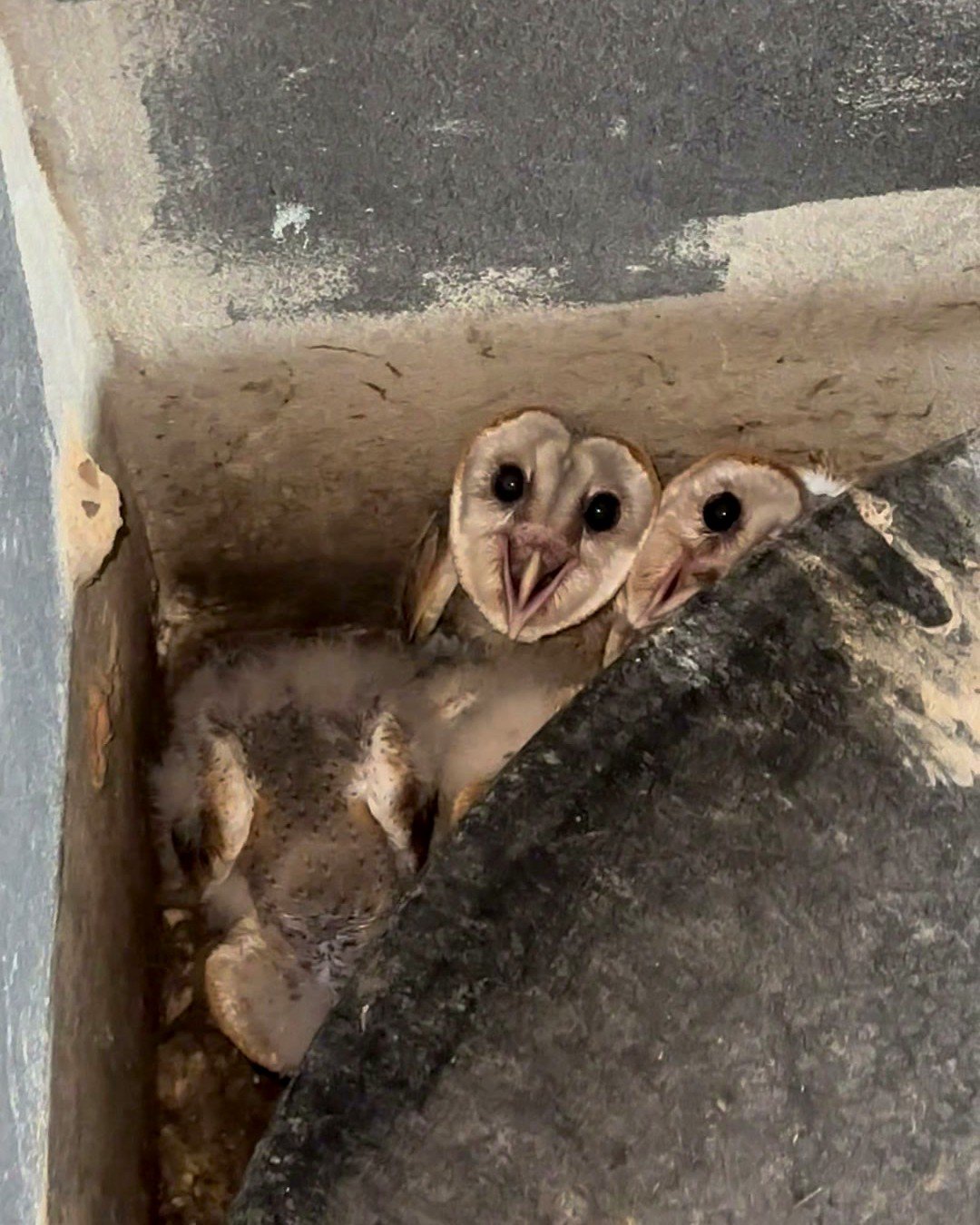
You walk into your swiftlet house in the daytime and there is a white, watery splash on the floor. Much bigger than any swiftlet dropping. Next to it, a few soft little balls of fur.
Your first thought: is it an owl?
If you see both, it most likely is.
Don’t sweep it up yet, and don’t rush to buy anything. We know owl habits well. What goes wrong is that farmers start in the wrong direction, and only get serious once the owl has become a regular.
Read what it leaves behind
The bones and feathers an owl cannot digest, it brings back up. Those are the soft balls of fur you are looking at.
Its droppings are easy to recognise too. A big white liquid splash, very smelly, with feathers in it. Bat droppings are small. Snake droppings have no smell and come out with whole swiftlet feathers in them.
Owls also have a season. When the paddy fields are full, there are plenty of rats there, so the owl has no reason to risk a swiftlet house. After the harvest the rats get scarce, the owl gets hungry, and it comes for the swiftlets. Around us we hear about it most from the end of the year into the start of the next, but it depends on when food runs short in your area.
A new owl and a regular are two different problems
An owl is nervous in a new place, the same as a swiftlet. On its first visit it does not fly straight in. It watches from somewhere nearby, then stands at the entrance hole, then flies in to find a place to stand, and only then goes deeper.
So the first visit is your best chance. We say the same on our website: on the first visit, do not let it stand at the entrance hole. If it manages to stand there the first time, it learns the place is open. If it cannot, most of the time it does not come back.
A regular is different. An owl that has been in many times flies straight in. Whatever you install at the entrance hole, it will most likely never touch, because it no longer stops there.
That is no reason to stop looking after the entrance. One regular usually means there are other owls nearby, and the new ones will still stop at the entrance first.
There is a harder case still: owls that were born in your house. Kiew Meng Kui, who teaches the Swiftlet Signature Masterclass (SSM) with me, talked about one house where every owl that turned up was the same colour and the same kind. They were young owls that had hatched inside, flown out, and come back. To them, that house was home.
Common mistakes
One: putting a very bright light at the entrance hole.
The white owls we usually see at swiftlet houses are not afraid of light in the first place. What a light can cost you is in a separate post, linked at the end.
Two: changing the entrance hole until it barely looks like one.
I have seen farmers fit iron grilles over the entrance, or close it down to a tiny gap, to keep owls out. The owl still came. What that entrance said to every other bird was: do not come in here.
Three: getting rid of a few and thinking the area is clear.
Some farmers say that since they dealt with a few, the others got scared, and they have not seen one for months. That is luck talking. Not seeing one may only mean it is hunting somewhere else this season. And with the ones born in your house, when one goes, the next comes back. Kiew Meng Kui’s way is to go and check every day for a stretch of time, not once.
Four: thinking it is over once the owl is gone.
Many farmers who had an owl tell me the owl problem is solved, but the swiftlets just will not come.
The owl is gone, but its droppings are still there. Kiew Meng Kui says the droppings have to be dealt with, so the smell slowly goes away.
There is a harder case. We once worked on a blacklist house that had not been looked after for a long time, and it was much harder than a new one. The swiftlets were wary of the predators that had been there, and the predators thought the place was already their home and kept coming back.
How to check
One: confirm it really is an owl. Use the signs above: a big white splash, fur balls, a strong smell. If you cannot tell, take a photo and leave it unswept.
Two: work out if it is new or a regular. The difference above is the test. If it stops at the entrance before going in, it is most likely still new. If it flies straight in, it already knows the house. If your CCTV caught it coming in, send us the clip and we will look.
Three: find where it stands. For a new owl, look at the entrance hole and the spots around it. For a regular, look inside the house for where it stops. Go in during the day, after the swiftlets have flown out.
Four: check if it is already living there. If every floor has its droppings and fur balls, it lives there. I once saw a house nobody had looked after for a few months. It used to have nests, and they were eaten down to nothing. Not even fresh swiftlet droppings were left.
When equipment comes in
A new owl and a regular need work in different places. For a new one, the focus is the entrance hole. For a regular, it is the spots it uses inside. What to use and where depends on your entrance and your layout, and buying things before the house is understood is a gamble. That is the order the MDK Swiftlet House Diagnosis Method follows. Diagnosis first, prescription second.
Years ago, a friend’s swiftlet house suddenly had a lot more swiftlets overnight, and a week later some of them started building nests. He could not work out why. Later he found out that a house nearby had an owl get in, and it had laid eggs inside.
So if you keep predators under control and the houses near you keep getting disturbed, there is a good chance the swiftlets in that area will come and live in yours.
What to do next
Pick a day, wait until the swiftlets have all flown out, then film your way in from the entrance hole on your phone, talking as you go. Where you see droppings or fur balls on the floor, stop and film them clearly. Then record the internal sound and then the external sound.
Got CCTV? Send the clip where the owl shows up too.
Send it all on WhatsApp. We will tell you whether it is new or a regular, where it stops, and where to start. If we need more after that, we will ask.
More on predators: Will a light at the entrance hole keep owls out? · Feathers on the swiftlet house floor · Snake in your swiftlet house