

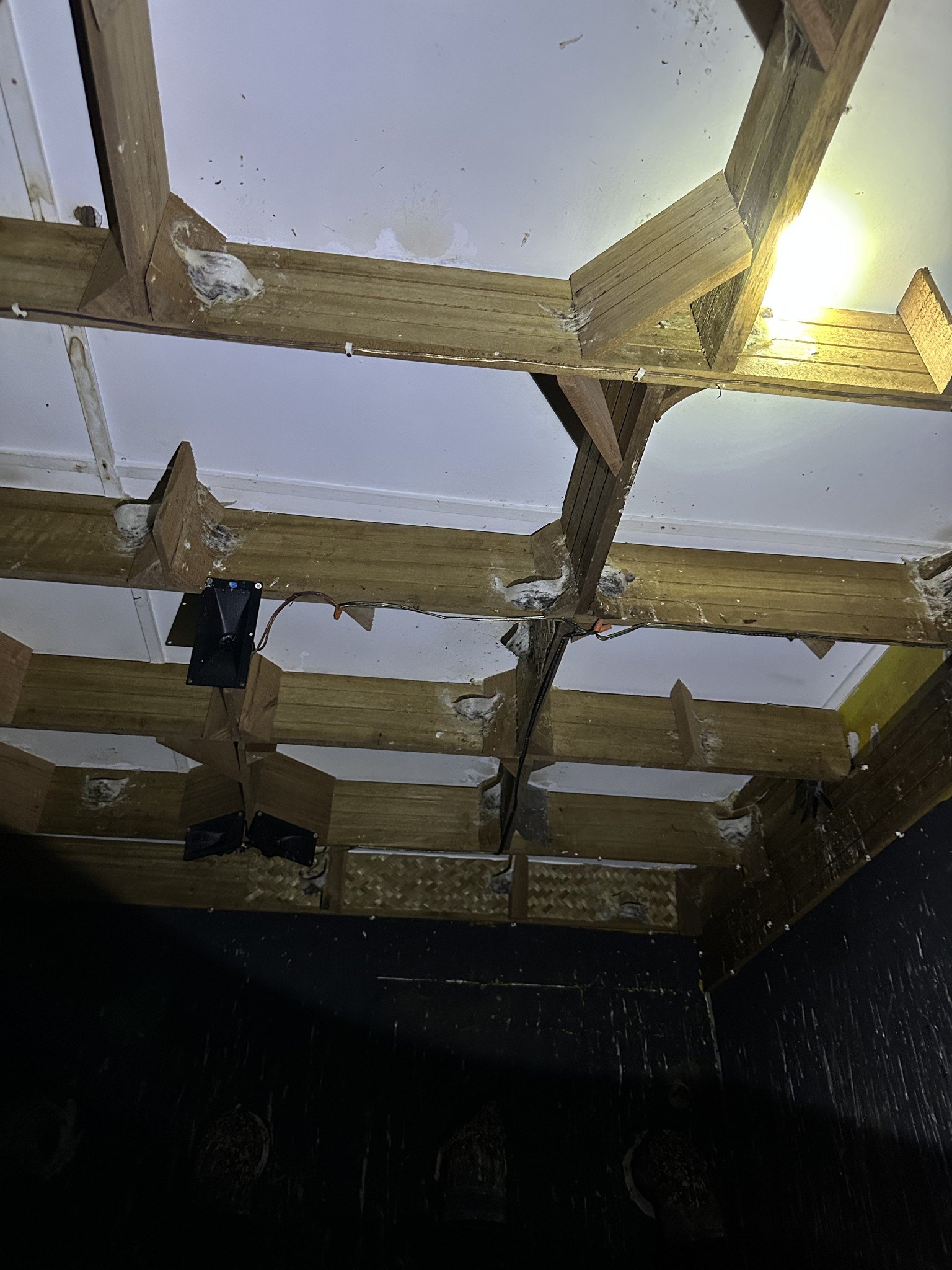
When nests start falling to the floor, most people say the same thing straight away. Spray more water.
That is not wrong. It is only half the answer. This post is the other half.
What a nest shows you before it falls
When a nest dries out, the first thing you see is the edge curling up. Then it cracks. Then it falls to the floor.
So do not only look at the floor. Look up at the nests still on the planks. Are the edges curling? Are they cracking?
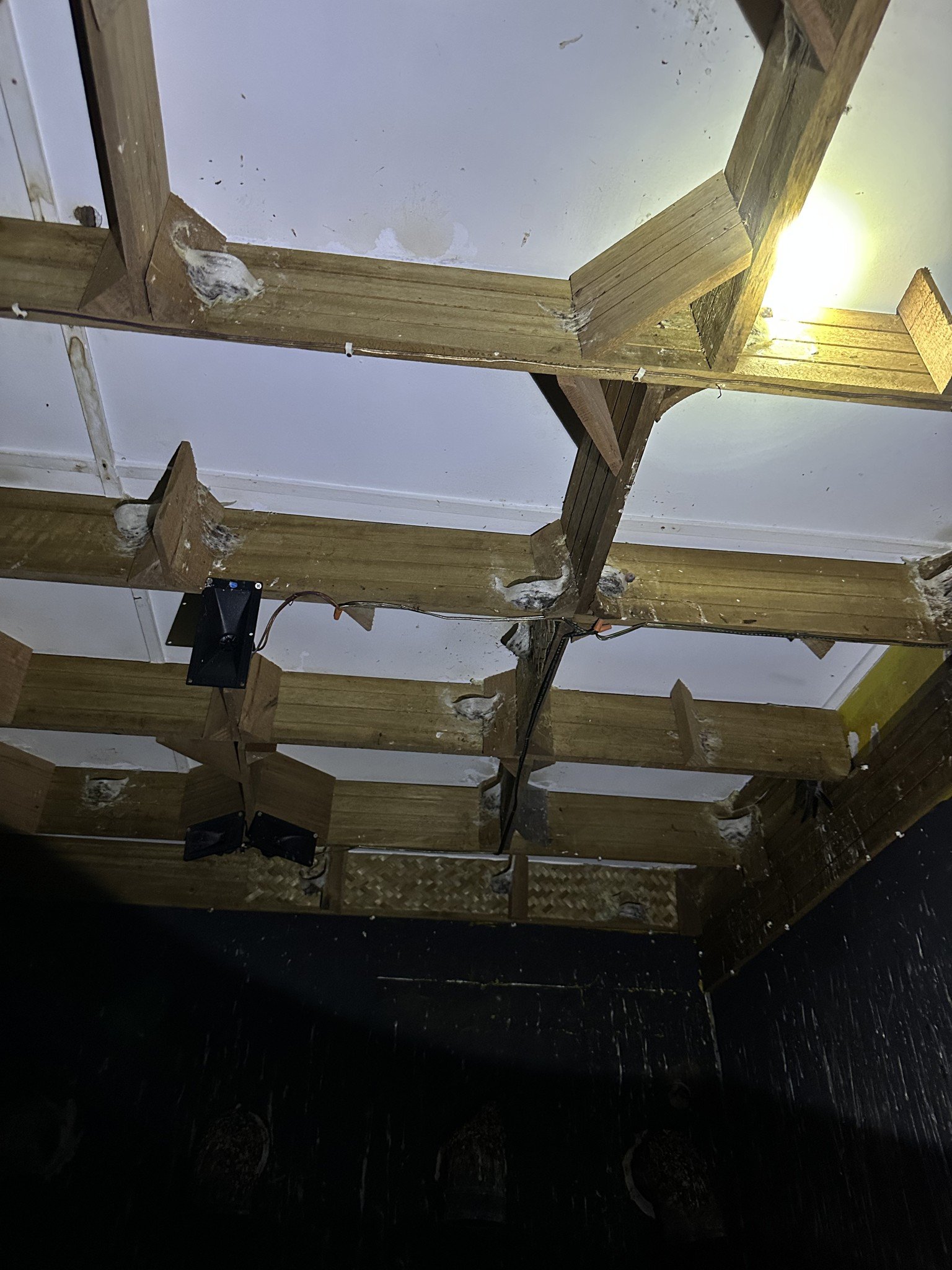
This post is about the nest itself falling. If what you find on the floor is chicks, that is a different problem, covered in why swiftlet chicks are falling and dying on the floor.
Spraying helps, but spraying alone is medicine
A nest falls because it is dry. Spraying keeps nests from cracking and falling. That is what spraying is for.
The real question is why the nest is dry. The air is dry because the house is hot. Once the house heats up, the air cannot hold its moisture, and the nests dry out with it.
So the order is: heat first, then dry air, then falling nests.
Spraying only deals with the last step. The heat is still there, so you have to keep spraying. We call that medicine. It holds the symptom down, but the cause stays.
Some owners also spray more to cool the house down. Careful. Water on its own does not take heat away. You feel cool after a shower because the water picks up the heat from your body and is then carried away. If the water you spray in your house is not carried out of the house, the heat stays inside. You walk in and it feels like a sauna.
The more you spray, the easier it is for planks and nests to go mouldy. Once there is mould, the birds slowly become fewer. The humidity side is in how to increase humidity in a swiftlet house.
The other reaction: plastic mesh and straw mats
Other owners work on the planks instead. The nests cannot hold on, so lay down something the birds can grip.
Start with green plastic mesh. It works the same way as stainless steel mesh. When it first goes up, it does help the birds’ feet grip, and the gaps behind it spread moisture more evenly so the nests can grow bigger.
But plastic mesh has three problems.
One, plastic holds a nest even worse than stainless steel mesh, so nests fall off more easily.
Two, you cannot clean the holes behind it.
Three, over time dust and moisture build up there, and dirt turns into mould.
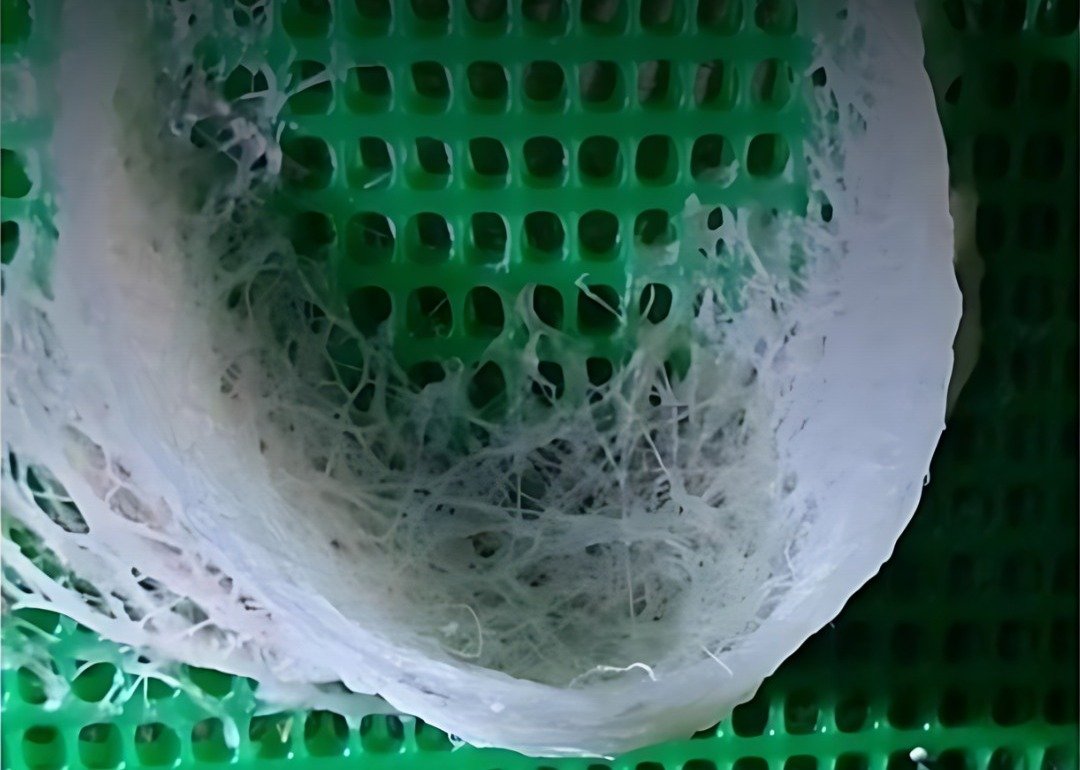
Swiftlets are very sensitive to mould. If the mould gets out of control, it can take years before you see far fewer birds. That is how plastic mesh can cause a sudden production drop.
Then straw mats. Many owners find the birds pick the mat first. The surface is soft, their feet catch on it, and nests stick to it easily.
Personally I do not like using them. Without mats, the birds still increase. A straw mat soaks up moisture from the air, a swiftlet house is already damp, and the mat can grow mould quickly.
What to check, in this order
One: find where the heat comes from
The heat in a swiftlet house comes from two main places. The roof, and the walls.
If the top floor is clearly hotter, look at the roof. With no airflow between the roof and the ceiling, the heat stacks up layer on layer.
If the whole house is hot, look at the walls.
The direction is simple. Do not let heat sit. Keep fresh air coming in.
For roof heat, add airflow between the roof and the ceiling, plus insulation. For wall heat, get the insulation right. If the ceiling is still hot, add a bit more insulation above it. That usually handles it.
How to route the airflow is in swiftlet house ventilation. Why we do not tell you to buy a thermometer and chase a number is in what temperature should a swiftlet house be.
Once the heat is under control, spraying or not makes much less difference. Some of our houses hardly spray, and some do not spray at all.
Two: if you have mesh, check the mesh and the ceiling
If you have mesh up and nests still keep falling, go back to step one and check whether the ceiling is too hot. When the house heats up, metal mesh is the first thing to change temperature.
With new stainless steel mesh, think of one more thing. It goes through machines at the factory, and those machines have machine oil on them, sometimes too little to see. If the mesh is not treated before it goes up, the birds will find it hard to build on.
Three: can you clean behind it?
If you already have mesh or mats up, ask yourself one question. Can I clean the holes behind it?
If not, dust and moisture keep collecting. Fine today does not mean fine later. Not seeing it does not mean it is not there.
If you are planning to change your tweeters, treat the plank first when you take them down, then put them back. There is a lot of mould hiding behind tweeters too.
When it is the equipment’s turn
Only after these three steps do we talk about equipment.
If the heat is sorted and the nests are still dry with curling edges, that is when to consider a humidifier. Be clear why you are putting one in. Someone else having one is not a reason. Our own humidifier, Durian, has its power kept low on purpose. More power means more noise, and it is easier to spray too much at once and invite mould. A little at a time beats a lot at once.
If the planks have mould, wash the planks. We use our own Meranti+ Nesting Plank Enhancer to get them clean.
New planks and mesh come last. How bad a plank has to be before you replace it is in should I replace damaged nesting planks.
Look after your planks and keep them as close to the original as you can. Swiftlets are very sensitive to mould. Take care of those young birds and do not gamble with your planks.
Your next step
First, check these yourself and write the answers down.
One, the nests that fell: which floor, and which spots, are most of them from?
Two, is that the top floor? When you walk in, is the top floor clearly hotter than below?
Three, the nests still on the planks: are their edges curling?
Four, is there mesh or a straw mat on the planks? For how long?
Five, how long do you spray each day right now?
Then, in the daytime after the birds have flown out, film your way in from the entrance hole on your phone, talking as you go, and record the internal sound and then the external sound. Take a few photos of the curling nests and the spots where nests fell too.
Send it all to us on WhatsApp. We will check it with the MDK Swiftlet House Diagnosis Method and tell you what to change first. Diagnosis first, prescription second.