

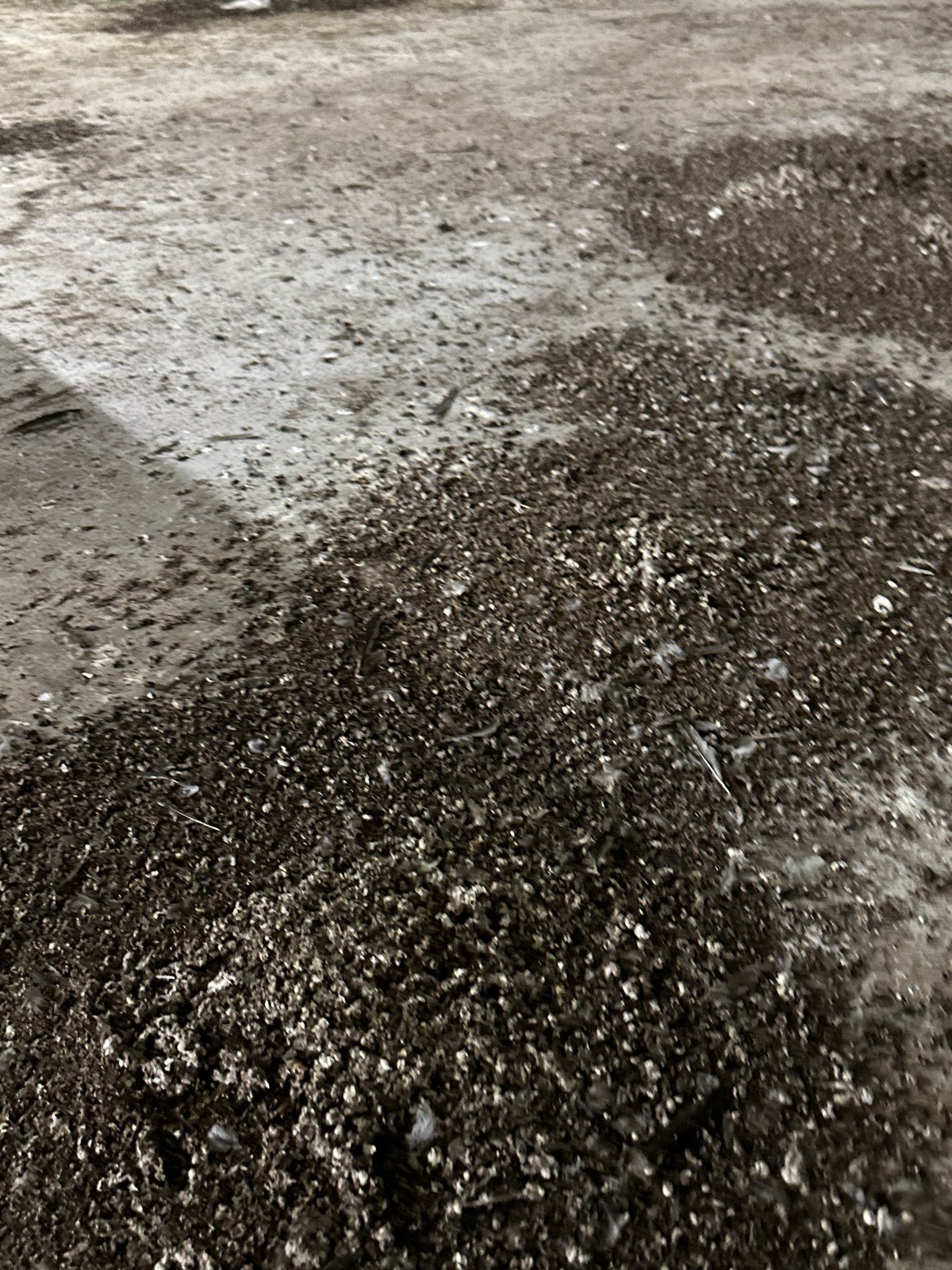
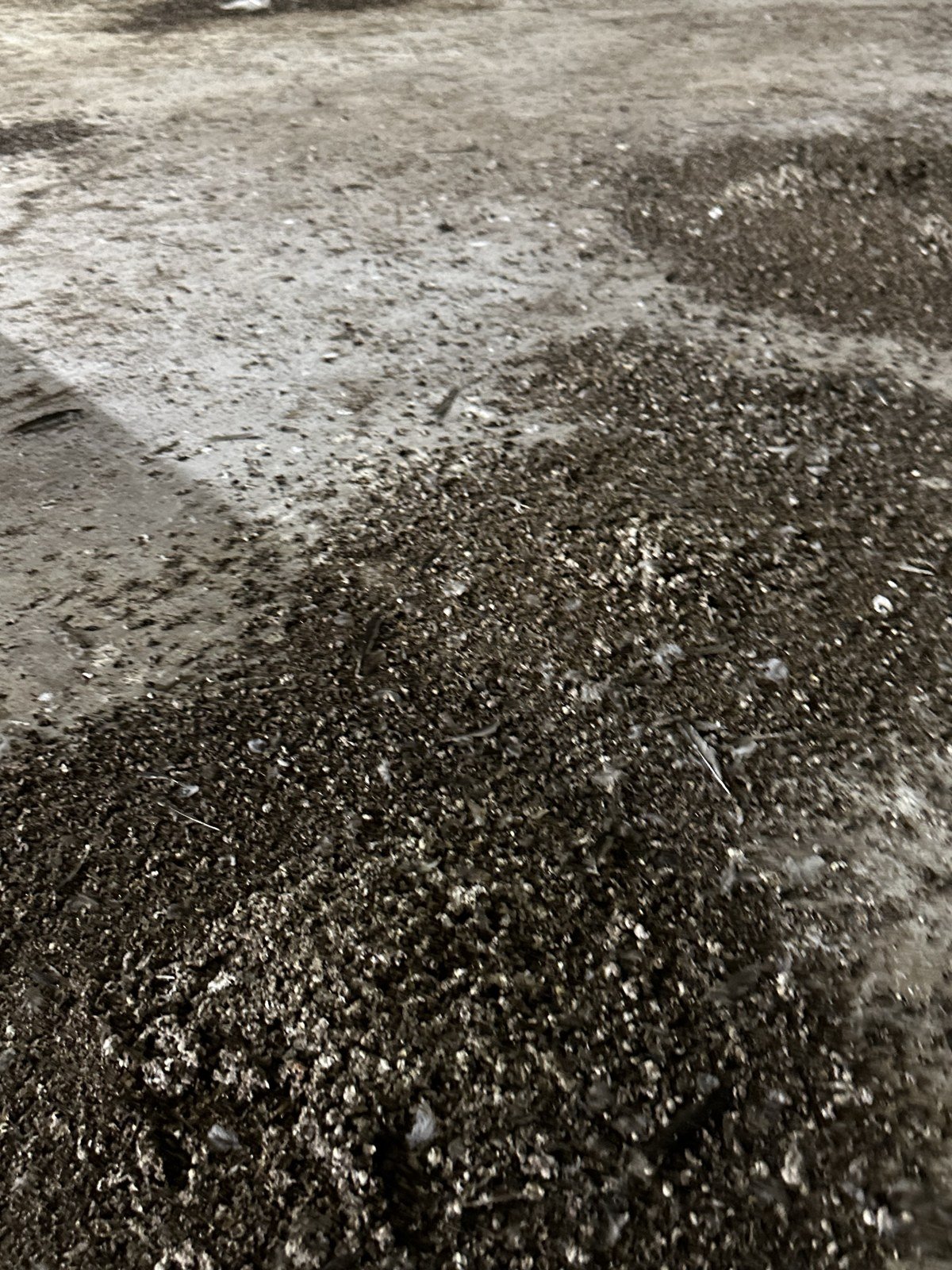
You walk in during the day and the droppings on the floor look powdery and sandy. There are small beetles crawling on the floor too.
A lot of owners see that and think, well, droppings are droppings.
That is not normal. Droppings turning powdery like this are a sign of small beetles.
What powdery droppings do to your house
Once the droppings go powdery, a bit of wind or the birds flapping their wings and the whole house has a layer of dust in the air.
The beetles also make your edible birds nests dirty, and the smell in the house starts to change.
Swiftlets have a better nose than you think. Droppings that insects have chewed through lose the pull they used to have, and the birds start to feel the place is dirty and not safe.
At that point, adding more swiftlet sound or more aroma only treats the surface, not the cause.
The usual mistake: “But I spray regularly”
That is the first reaction from a lot of owners. Spraying every month, and still more beetles on the floor, and the droppings getting more powdery.
Then the doubts come: did the factory cut corners? Did they change the formula?
Usually neither. The way I see it, how you sprayed matters more than whether you sprayed. Spraying is not the same as fixing the problem. When people get sick, they do not just take any medicine. You find out what it is first, then treat that.
When one product seems to work less and less over time, there are a few reasons:
1. More birds, different amount. Medicine for a child is not the same as for an adult. When the colony grows, the amount you need changes too.
2. Fresh droppings cover it faster. With more birds, new droppings cover the surface you sprayed faster and thicker, so you need to spray more often.
3. Insects build resistance. If you spray and do not kill them, the next time they meet the same product they are harder to kill.
4. The insects know you sprayed. Some products the insects can sense, so they stay away from the spots you sprayed.
5. How you use it. How you use it and how you spray it changes what you get.
6. How damp and how clean the house is. More on this one below.
So when the beetles will not go away, the first move should not be changing products straight away.
What to check, in order
Go in during the day, once the birds are out.
One, look at the droppings and the insects.
Are the droppings on the floor powdery and sandy? Are there insects on the floor or the walls? If you see them, take a photo.
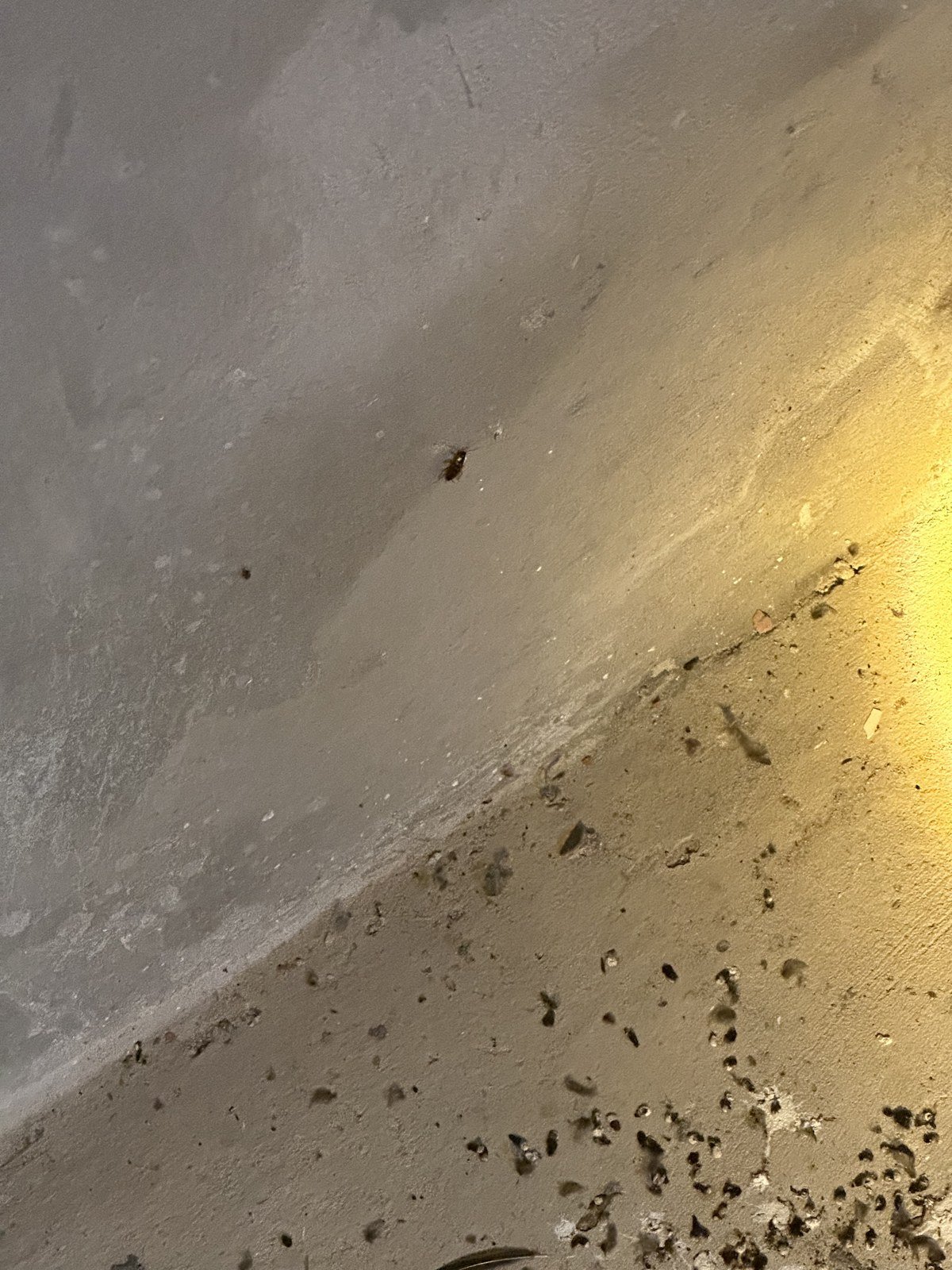
Two, check whether the droppings are left piled up, and whether they are damp.
Most insects start from the droppings. When droppings are left piled up and damp, insects grow in them and then climb up onto the planks. That is reason six above, damp and cleanliness. If the droppings stay piled and wet, the insects keep coming back however much you spray.
What else a damp house brings, I covered in How to increase humidity in a swiftlet house.
Three, look at how you have been spraying.
Go through the six reasons above and write these down honestly: which product you have been using, and how long without changing it. Whether the amount changed when the birds increased. How you spray and where.
Where to spray depends on whether the droppings have been collected. I went through that order in Ants in your swiftlet house?, so I will not repeat it here.
When it is time to change products
Only after those three checks do we talk about products. Pest control is a big part of looking after a swiftlet house, but it has to be done right.
Do not rely on just one product. One product alone will not clear small beetles. Rotate between different ones. There is a type the insects cannot sense, so they do not avoid it, and when they touch it they carry it back and other insects die too. Rotating also slows down resistance.
Not every product can go on the planks. The kind of pesticide you use on the floor and walls should not be sprayed on the nesting planks. If the insects on the planks are already bad, you need one that is suitable for planks. Getting this wrong affects the whole plank, so do not guess.
There is no fixed schedule for how often. It depends on what insect you are dealing with. Different insects need different handling.
Powdery droppings are a sign. If the beetles will not die, it can be the way you spray, or droppings left piled up in a damp house, or both. Find out which first, then decide what to use. That is the order of the MDK Swiftlet House Diagnosis Method. Diagnosis first, prescription second.
How much smell matters to swiftlets, read What smells do swiftlets hate?.
Your next step
Next time you go in during the day, do not spray straight away. Take two photos: one close up of the powdery droppings, and one of the insects on the floor or wall, clear enough to see what they look like. Then write down which product you use now and for how long.
Also film your way in from the entrance hole on your phone, talking as you go, and record the internal sound and then the external sound.
Send it all to us on WhatsApp. It is free. We will tell you where the problem is and what to deal with first. If we need more, we will ask. You do not have to get everything ready at once.