

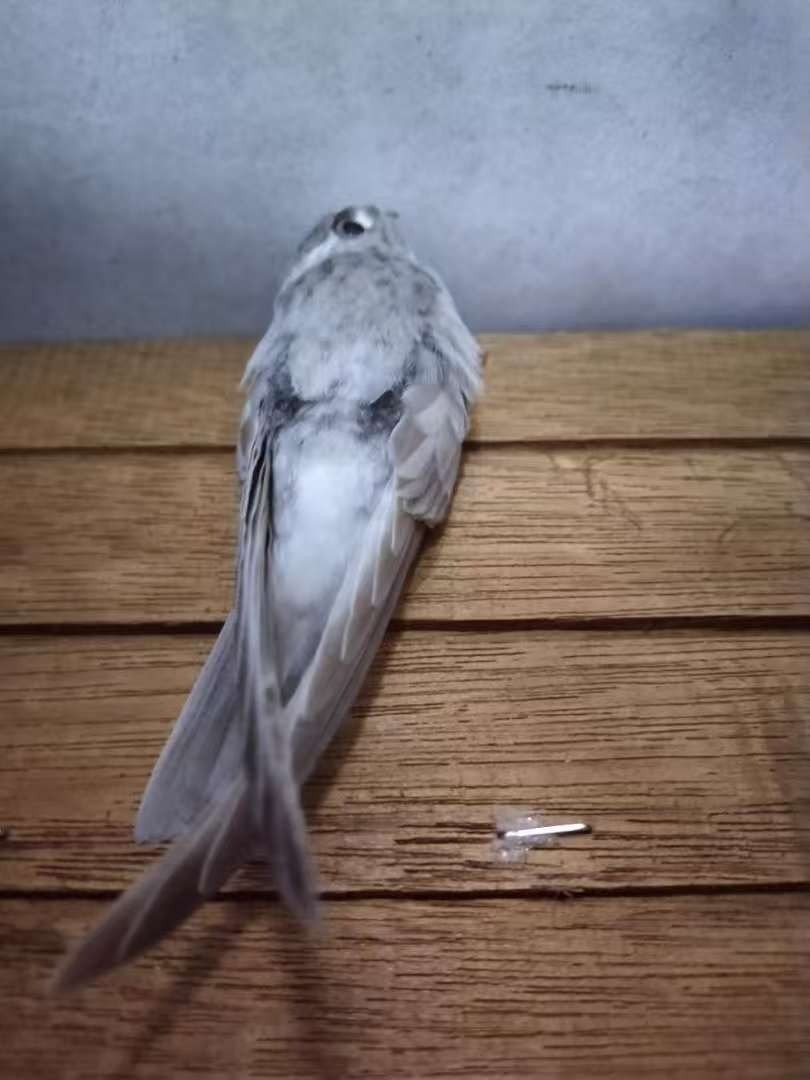
You harvest the nests, or spray something, or finish a round of renovation. Soon after, you walk in and there are chicks lying dead on the floor, right under the nests.
Why does this happen? There is more than one reason. I will go through them one by one. Check each against your own house and see which one fits.
What you are seeing
Most of the birds that fall are about-to-fly birds. Their feathers are nearly complete, and they are lying directly below the nests.
Check one more thing. Around the same time, are your nests carrying a lot more droppings than normal?
First: was it bitten, or is the body whole?
Pick one up and look.
If the body is bitten or torn, that is a different problem. Check for predators first. I wrote about how to read those signs in feathers on the swiftlet house floor.
I ran into a different case once: someone had broken in. The locks were cut, and the whole floor was covered with dead chicks. In that situation, the first thing to fix is the door and the locks.
If the bird is whole and has not been bitten, that is what this article is about.
The usual wrong guess
When chicks die on the floor, the first thought is usually: did something get in?
If the bodies are whole and not bitten, look inside the house. Pests on the planks, something you sprayed, or the birds getting frightened while someone works inside. Any of these can do it, and all of them mean looking at your own house.
How to check, step by step
1. Are the nests and planks clean? Are there pests?
If the nests have a lot of droppings and the planks are dirty, in most cases pests on the plank are bothering the birds. Small pests like fleas make the chicks itchy, and itchy chicks fall more easily. Dirty planks also mean the chicks pick up bacteria and get diarrhoea. More of them die, the nests get dirtier, and they grow more slowly too.
While you are there, check the floor for small black beetles.
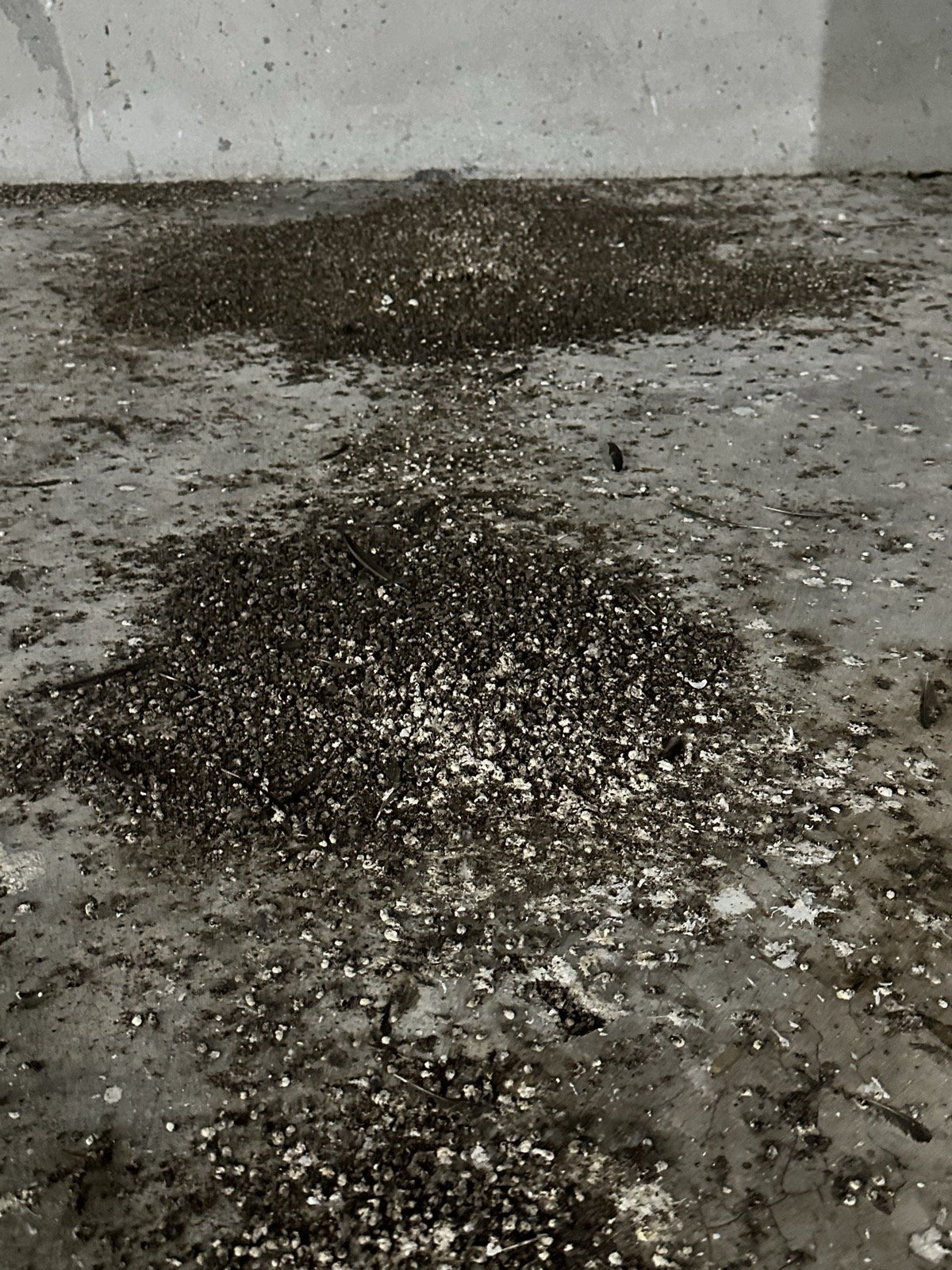
2. Did you spray anything recently?
The insecticide you use inside can kill chicks if it is mixed too strong, sprayed too much, or gets into a bird’s eyes. So watch for a pattern. Every time you spray insecticide, do you find many dead birds afterwards? If yes, and you still want to keep using that product with peace of mind, send it for a lab test or ask the seller properly.
You do not need to spray everything. Find out what pest you are dealing with first, then use the right product for it.
There is one more case. Many chicks die in one night, and the rice fields outside were just sprayed. Normal farm chemicals usually do not have much effect. But if it happens to your house every time they spray, the chemical they use is probably a strong one. Next time, try to cover the openings where air comes into your house before they spray, and open them again after.
3. What did you do inside before the birds started falling, and at what time?
This one is about you. Spraying at the wrong time can frighten the birds too. Spray anything in the morning. If you go in suddenly in the afternoon to renovate or spray, the birds coming home will feel the house is different, especially the ones that come back suddenly.
Then there is switching off the internal sound when you go in. When the internal sound goes off, the chicks lose their sense of safety. So do not run the internal sound so loud that you cannot stand it yourself and have to switch it off every time. Keep it on while you work.
Wash or spray the planks only after harvesting, once most of the birds have flown out. The full set of rules for working inside is in things never to do in a swiftlet house.
4. Are there many about-to-fly birds hanging in that area?
Birds that have just learned to fly, and do not fly well yet, fall the most. When you get close, they will definitely try to fly, which is exactly why they fall.
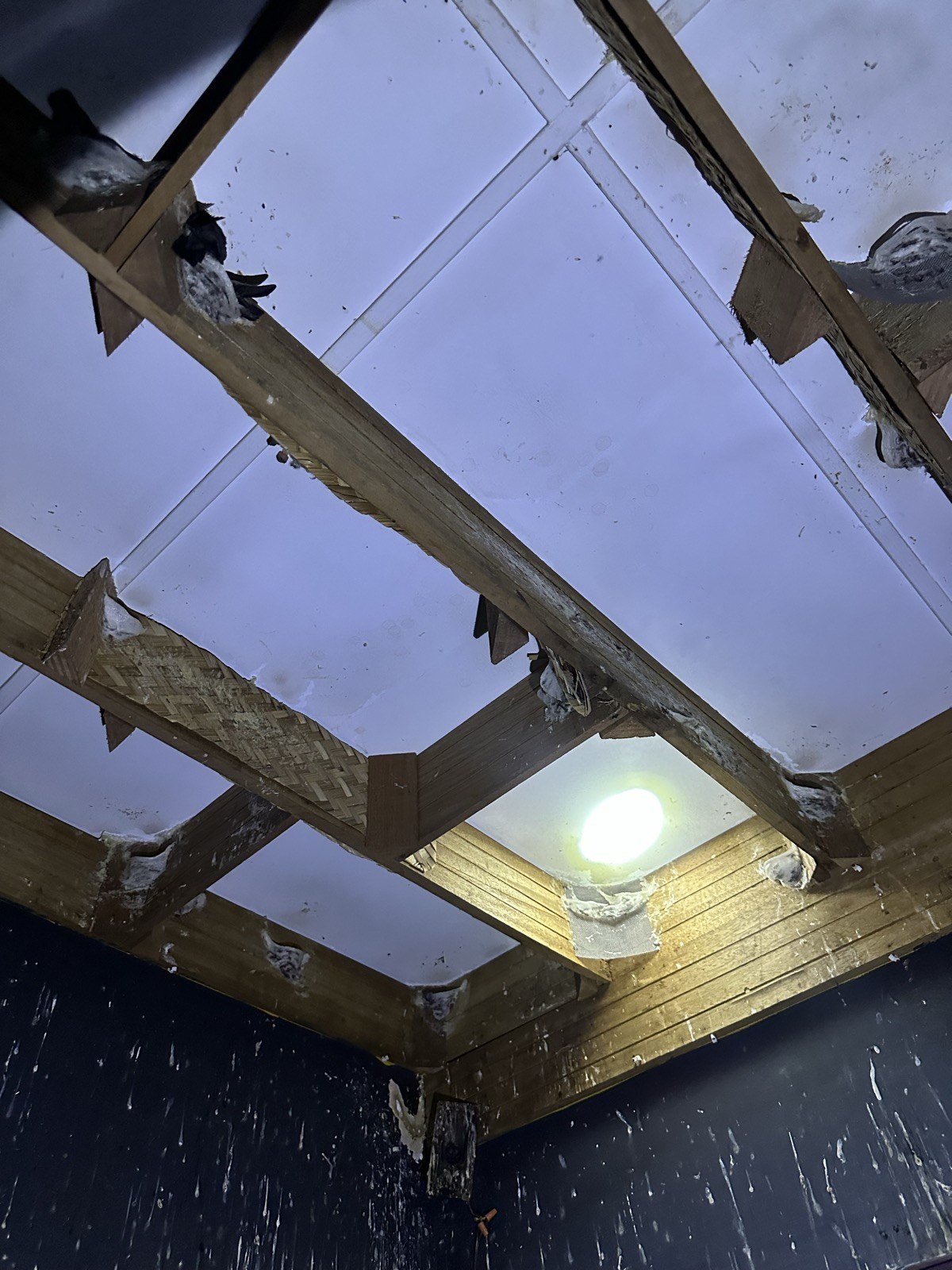
When there are a lot of these birds on the planks and you are not sure you can work without disturbing them, hold off on changing planks, washing planks, or spraying anything on the planks. Sweeping droppings off the floor, building partitions, checking the tweeters are fine to do.
5. Did it happen during a very cold spell?
Eggs need warmth to hatch, and chicks need warmth to grow. A newly hatched chick has very few feathers, and cold can kill it. Years ago, during the big floods in southern Thailand and northern Malaysia, it was probably the cold that killed a very large number of chicks. The adults could fly. The chicks could not.
6. Two causes people rarely think of.
The mother bird stops coming home, so nobody looks after the chicks. Or the sound system starts making a harsh, strange noise that scares them. When you walk in, stand still for a moment and listen. Is that the same track you normally play?
When products come in
Only after you have checked the points above, and the problem really is pests and dirt on the planks, do we talk about what to use.
One customer followed our advice on the planks. The planks were treated with Meranti+ Nesting Plank Enhancer and the floor was sprayed with Chalcid. After that, chicks almost stopped falling, the small black beetles on the floor were cleared, and the planks that were very dirty were no longer powdery. Meranti+ can be sprayed straight onto planks that have nests and chicks on them.
But if the birds were frightened off the nests, the problem is how you work inside, and changing products will not help much. The MDK Swiftlet House Diagnosis Method works in that order too: diagnosis first, prescription second.
Your next step
First, think back. In the weeks before more chicks appeared on the floor, what was done inside? What was sprayed? Was it done in the morning or the afternoon?
Then go in during the day, after the birds have flown out, and take a few photos: the fallen birds on the floor, the nests and planks right above them, a close-up of the plank surface, and the droppings on the floor. Then use your phone to record a little of the sound in the house while you stand still.
Send the photos, the sound, and whatever you remembered to us on WhatsApp. We will help you see whether it is pests, the spray, the birds being frightened, or something else. It costs nothing, and if we need more we will ask.