

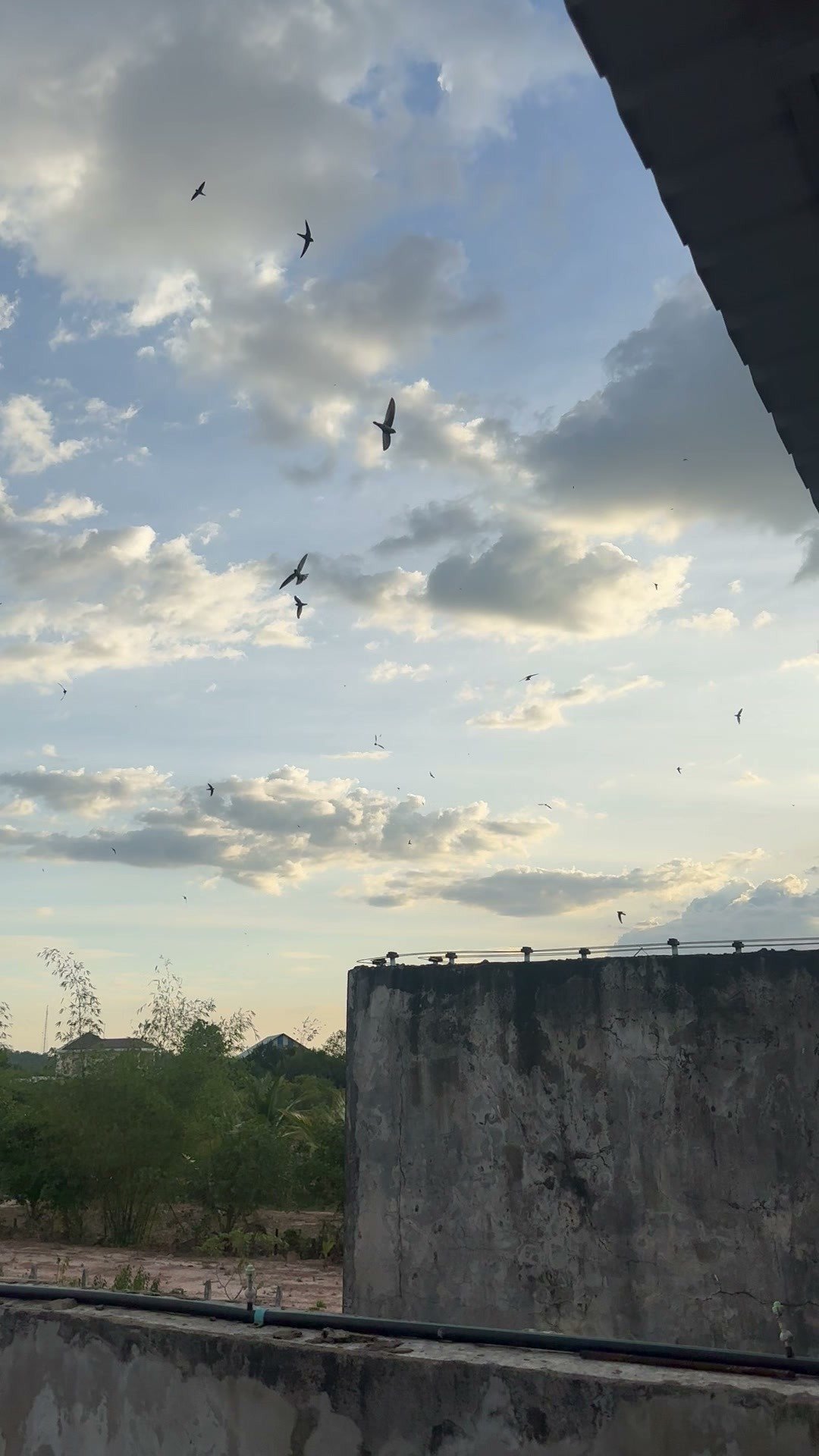
The birds come, loop around outside a few times, and leave. Or some went in, and a few days later there are fewer.
Sooner or later you ask yourself: is some sound scaring them off?
Sounds from outside are mostly out of your hands, so I will leave them alone here. This is about the half you control: the sound your own house is playing.
What you are seeing
A bird darts at the entrance hole and bounces straight off.
Or the birds keep circling outside the hole and will not come down.
Or they hover at the hole, wings beating, and never go in.
Inside, the nests keep away from the tweeters, and some end up right behind them. The count is not moving. Sometimes it is dropping.
Any of these can be about sound, or have nothing to do with it. Before you switch anything off, swap it or turn it up, work out which one you have.
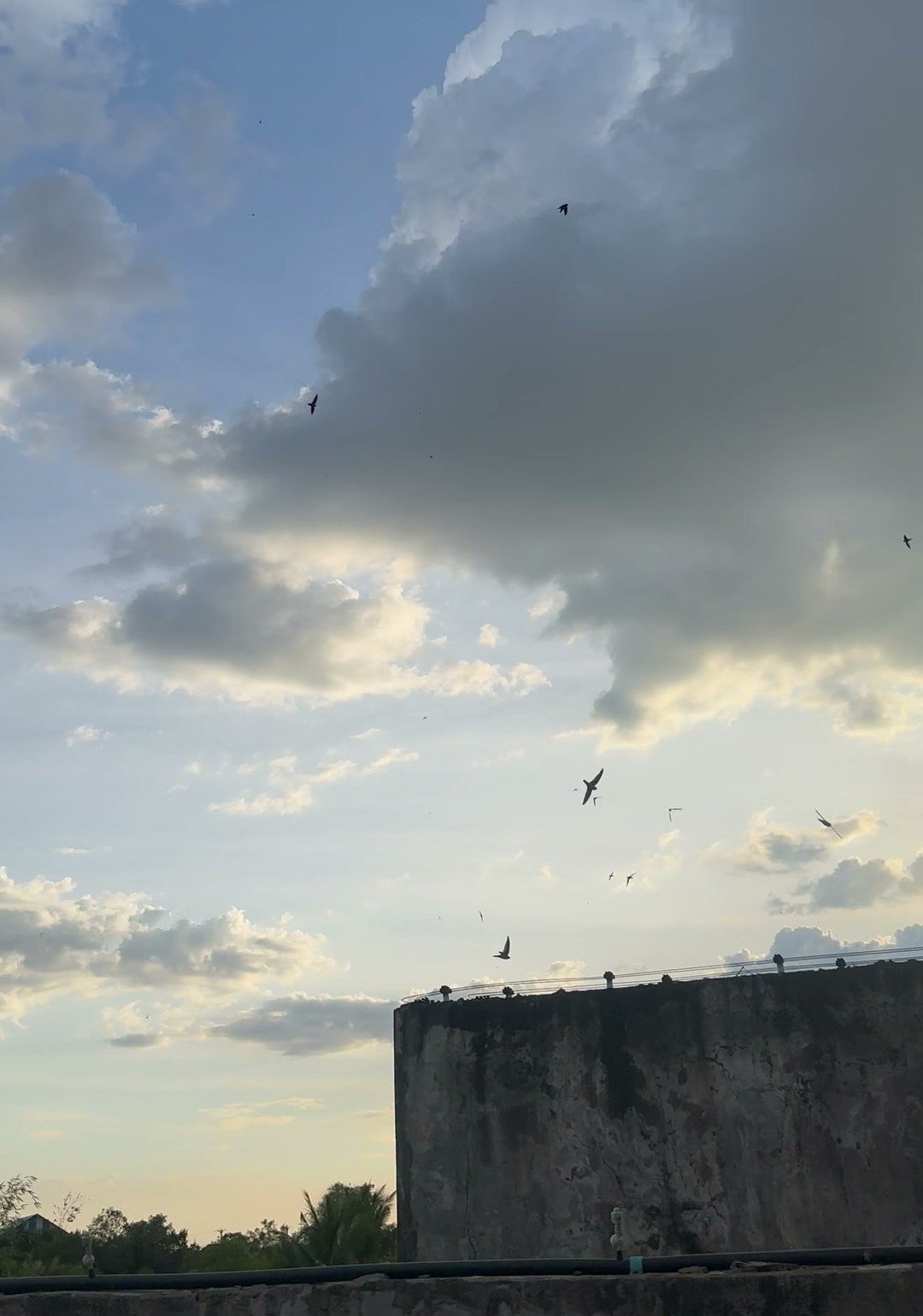
Which sounds push swiftlets out
The worst two are distortion and sound bouncing back off the walls.
You hear it yourself the moment you walk in. The sound is a jumble, the walls throw it back, and what comes out is too sharp. When it is like that, the birds will not build and will not stay.
There is another kind you will not catch. Swiftlets hear better than we do. A sound that has cracked a little or gone a little dull can slip past you standing there, and the bird hears it straight away. It may sound fine to you and still not sound fine to them.
Too many tweeters belongs on this list as well. When the house sounds far busier than it is, a visiting bird learns that the hard way and stays away after. More on that in where to place tweeters in a swiftlet house.
To be fair: if the sound is only tuned a bit off, the birds still increase, just slowly. While the count is still creeping up, you are not at the scared-off stage yet. When the count stops, or keeps dropping, something really is wrong, and luck has nothing to do with it.
Three common mistakes
Mistake one: birds circling the entrance, so the sound must be bringing in new birds.
It is easy to feel happy watching that. Most of the time, though, the ones circling are your own birds, too nervous to go home. You see it a lot right after someone has been inside.
So when you see circling, think back: did anyone go in today or yesterday? How to work inside without frightening the birds is in things never to do inside a swiftlet house.
Mistake two: birds hovering at the hole, wings beating, so the sound must be too weak. Turn it up.
Look at the entrance first. If the hole is not big enough, or the bird cannot see the second entrance (the second door that birds will pass through in your bird house) from there, you get exactly this. More volume leaves the hole the same as it was. How to check an entrance is covered in swiftlets circling the entrance but not going in.
Mistake three: birds dart at the entrance and bounce off, and you put it down to chance.
One bird now and then tells you nothing. Five or six in a row doing it, in and bounce, in and bounce, means the sound is pushing them back. The thing to do then is go and listen to your sound.
How to check
First, watch how they fly. You can read it on the spot, and it costs nothing.
Keep one picture in mind first. A bird that is really drawn by the sound flies straight, right at the tweeter, and touches that spot.
What happens at the entrance hole you can see without going in. When the birds come home in the evening, stand outside. Bouncing, circling, hovering with wings beating: match those against the three mistakes above.
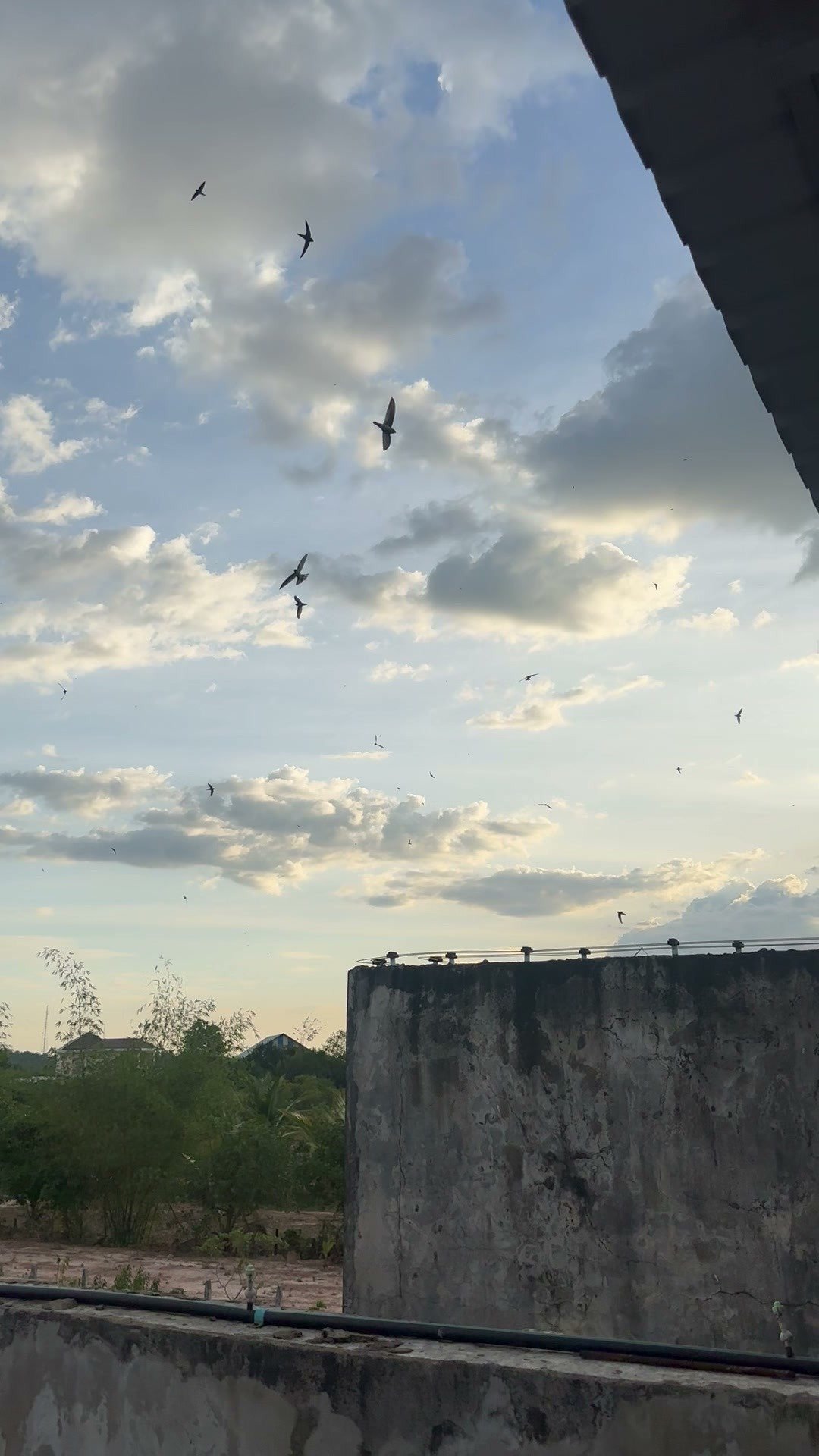
Second, look at where the nests are. Nests in front of a tweeter or close to it, that tweeter is helping you. Nests that keep clear of it, or hide behind it, that tweeter is chasing birds away.
Third, go in during the daytime, after the birds have flown out, record a few clips and listen to them at home yourself. What you are listening for is what this article already covered: distortion, sound coming back off the walls, a tone that is too sharp. Hear any of those and you know why the birds bounce off at the entrance. How far from the tweeter to record, and how many clips, is in why a swiftlet house stops growing.
When it is finally time to change equipment
Work out which one you have first, then decide what to touch.
An entrance problem will not be fixed by a different tweeter. The entrance is what needs work.
Too many tweeters usually means taking some out.
If the sound really is cracked or dull, check the amplifier playing it and the tweeters themselves before you blame the track. Where the nests are all hiding behind a tweeter, check whether that tweeter leaks sound out the back.
On volume, is louder swiftlet sound better explains why maxing it out causes trouble.
Next step
This evening, stand outside and watch your entrance hole for a while. Note what you see: more birds going straight into the hole, or more bouncing, circling and hovering?
Then, following the entry step of the MDK Swiftlet House Diagnosis Method, film your way in from the entrance hole on your phone, talking as you go, and record the internal sound and then the external sound. That is the video we want.
Send that video and what you saw at the entrance to us on WhatsApp. We look for free and tell you whether the sound is chasing birds off or the entrance is keeping them out. That is enough for a first look. If we need more, we will tell you after.