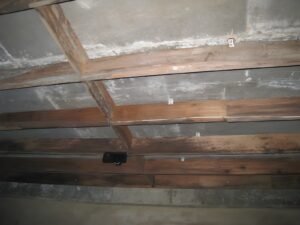
Your house has been running for more than ten years. The nest count slips a little further every year, but when you open the CCTV there are still birds going in and out, and it looks busy in there. You ask around and everybody hands you the same line: the swiftlets moved. Somebody will add that they all went overseas.
Once that line is said, there is nothing left for you to do. Rain falls, birds leave, what can you do about it.
Half of that line is true. The other half will keep you sitting still for a whole year.
What you are actually looking at
The nest count is not going up. Some years it goes down. But the birds are still there. Stand outside at dusk and the traffic is not far off what it was a few years ago.
Those two things being true at the same time is already a signal. It tells you the problem is not whether there are birds. It is whether there are birds building.
Are there fewer swiftlets now was about the birds outside your house. This one is about the inside.
The common misread: taking not nesting as not there
A swiftlet can live fifteen to twenty years. The years it will actually build nests are much shorter than that. Late in life it stops having young, so it stops building. It still lives in your house. It still flies out in the morning and comes home at night.
So a house that has been running over ten years usually holds two groups of birds. One group has retired and still lives there without building anything. The other group has finished its life and its spot is still sitting on the plank.
That is nature. It is not something you did wrong.
The went overseas version is the same story. New areas look busy because the houses there are new and few, and they are not carrying the ageing problem yet. I wrote back in 2025 that more than ninety percent of the houses overseas do not work out either. It was never about where you build. It is about whether you built it right.
The spot is still there, it just never reopened
Here is a habit not many farmers know about. A swiftlet will not take over a spot another bird has lived in.
The previous owner is gone, but the old marks are still on the plank and on the ceiling. A new bird flies across, hovers, takes one look, and will not go into that square. From then on that spot stays empty. One, two, ten, fifty, and your house goes dark one square at a time.
Think of the room chart at a hotel front desk. A guest checked out, nobody went in to clean the room, and the chart still shows it as occupied. It does not matter how many people are waiting in the lobby. That room cannot be given out.
So the real question in a house with dropping production is not how do I get new birds in. It is how many squares in my house have nobody living in them, and were never cleared.
How to check, in order
One, look at the age. Over ten years, put ageing at the top of the suspect list. Do not open with the sound.
Two, count the spots. Which squares still carry nests, which are empty, and how long they have been empty. Birds on the CCTV with a flat nest count is exactly this pattern.
Three, look at the planks. In an old house the planks usually go first. The place stays damp, and every bird that passes through leaves its smell behind. One of my students finally made time to wash his planks, and the water coming off them was as black as strong coffee. The dirt you can see is the easy part. The smell and the mould you cannot see are the real problem, and a swiftlet reads smell far better than we do.
Four, look for the next generation. A settled group of older birds starts thinning out somewhere around twelve to fifteen years. If you never managed to keep the young ones through that stretch, the rest of the story is more or less already written.
Walk those four steps and you have something concrete in your hands, instead of one sentence about birds moving.
When equipment finally comes into it
You may have noticed that not one of those four steps asks you to buy something first.
Clearing a spot and covering the old marks has nothing to do with swapping tweeters. Ageing is about the planks, the airflow, the entrances and the environment, and that has nothing to do with swapping the sound either.
Changing the sound is the easiest thing to do and the easiest thing to waste. If the spots were never reopened, the birds come in, take one loop, and still find nowhere to settle.
Equipment always sits behind diagnosis. The reason is simple. You do not know which squares are dark, so whatever you change is a guess.
Your next step
Old spots can be dealt with. Clean them, cover the old marks, and that square is open again. The young birds that fly out of your own house come back looking for a place at seven or eight months old, and they can move in. Eight houses out of ten with dropping production are pulled back this way, one step at a time. It is slow, but there is a road.
If the swiftlets moved, you can only accept it. If the spots were never cleared, you can do something today.
To find out how many squares in your house are dark, take three photos: the entrance hole, the flight path and the nesting planks. Then stand on the floor, about six feet away from the wall, and record the sound inside the house. Send all four to our customer service and we will look at it with the MDK Swiftlet House Diagnosis Method. Diagnose first, prescribe after.