

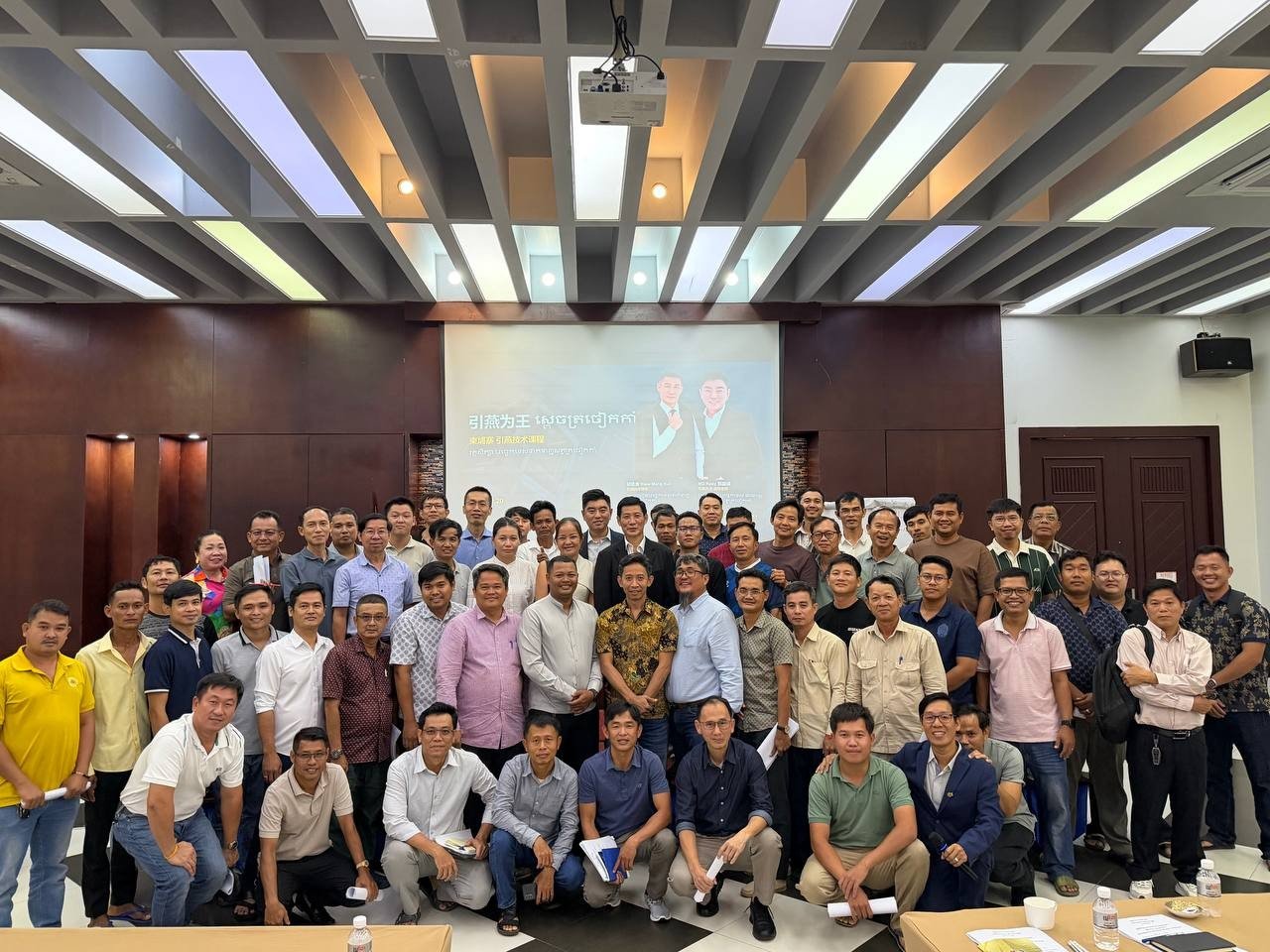
In September Kiew Meng Kui and I made a trip to Cambodia. On 20 September we taught a half-day class in Phnom Penh. On the same trip we visited a few swiftlet houses, and we also went to Angkor Wat.
Many people expect that Cambodia, being a new area, must have different problems.
What we saw: the houses look different, but they get stuck in the same places, and the way out is the same. Diagnosis first, prescription second.
This article covers five things:
- What we taught in that half day in Phnom Penh
- A few positions Kiew Meng Kui stated in front of the whole class
- What the house visits showed: most calls on site were to take out what was wrong first
- Why tuning comes last
- What you can do for your own house next
What we taught in that half day in Phnom Penh
This was the Phnom Penh session of our Swiftlet Signature Masterclass 2.0, a half-day sharing. Kiew Meng Kui spoke first, and I followed. The poster listed four topics: entrance hole design and house layout, how the tweeters inside are arranged, airflow and ventilation, and tuning. There was also a bonus on the myth about light.

Not one of those topics is about what to buy. Each is about whether the birds get in and stay.
In class I talked about what most owners do when the house has no birds: change to a new sound and hope it pulls in more swiftlets.
I told them it is like taking fever medicine again and again. The fever goes down, but you keep getting sick, because the cause was never touched. Sound is the easiest thing to change, so it gets changed most. But most of the time, the reason birds do not come in is not the sound.
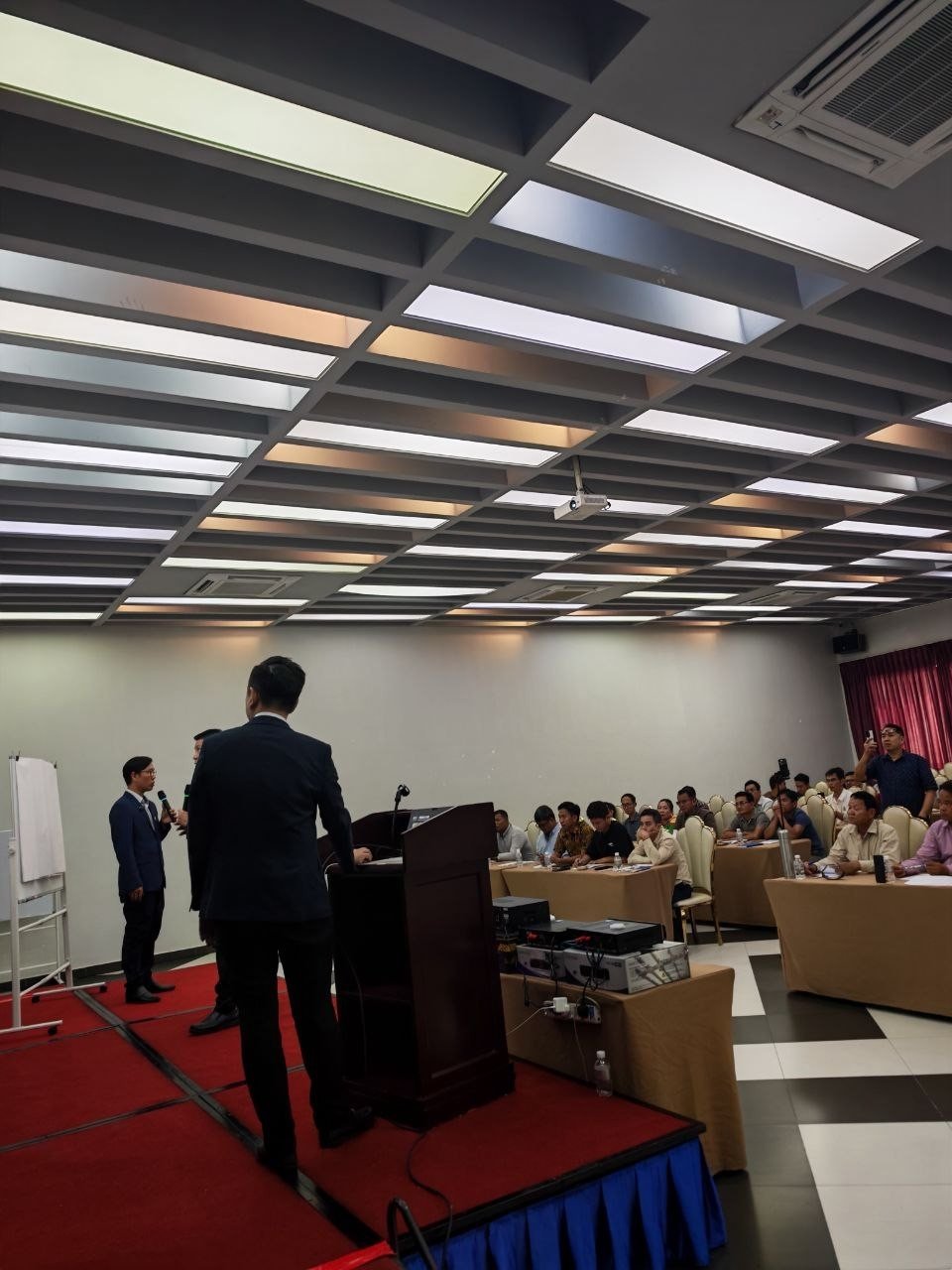
I also talked about house ageing that day. That part has its own article: Is your swiftlet house getting old?
A few positions Kiew Meng Kui stated in class
Swiftlets fly straight. Do not make them turn back. The birds need a straight path. An entrance hole that forces them to turn and double back is the wrong path.
A mistake in the structure is hard to save. If the path is wrong, the only way he gave was to open a new entrance hole. So before changing anything, look at the birds’ path first.
More sound is not better. With too much sound, the birds cannot find their way, and they come in slower.
Swiftlets do not look at the colour of the tweeter. They use sound and light to know where the way in is.
In a house design, the biggest key is airflow. That was his opening line. Hot air rises, the birds live up high, and bad air that cannot get out collects right where they stay.
Swiftlets are not afraid of light. How to use light belongs to the class. Here I will only give the position: “darker is better” is not something the birds told us.
What the house visits showed: most calls were to take out what was wrong first
Every house was different. For the ones with problems, the call on site pointed the same way: find what is wrong and take it out, not add something new.
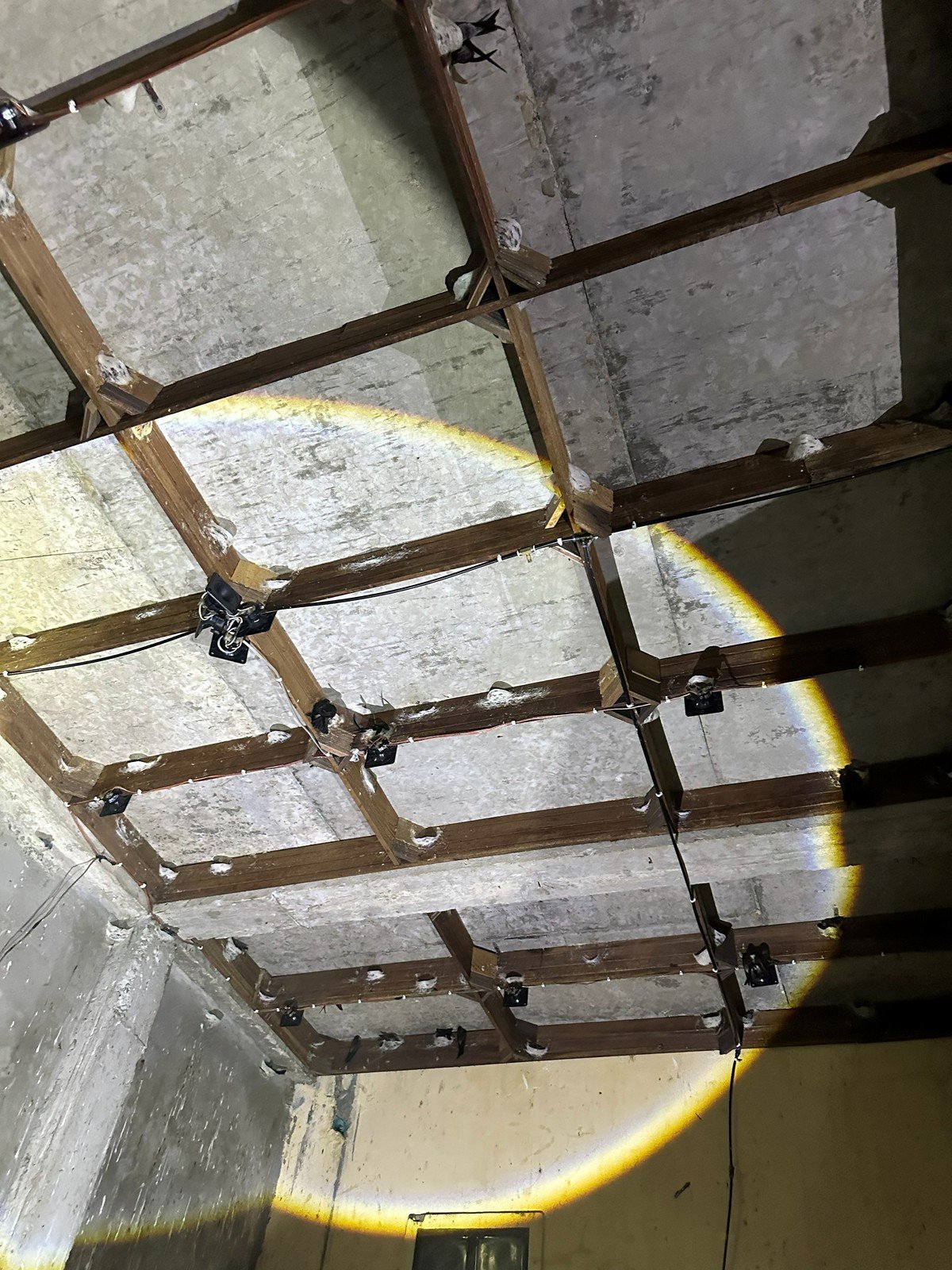
One house had an entrance hole that made the birds turn. The call on site was that the route was wrong and the birds needed a straight way in. That is the class line about structural mistakes, out in the field.
One house was too wet. Mould on the planks, dark nests, some with moss. What Kiew Meng Kui looked for on site was not a prescription. It was where the water was coming from. That house had more than one source: the fogger was running too much, and there was a water tank downstairs. The order was: find the source, let the house dry, get the exhaust right, and only then tune the sound.
Many people believe a damp house gives prettier nests. That day Kiew Meng Kui put it plainly: in a house that is too wet, most of the nests grow moss or go mouldy.
One house was doing well. No stuffy heat inside, and the tweeters were in the right places at the right angles. It was full, and another one had been added.
Why tuning comes last
Tuning matters. On site I told the owner that tuning is the most important step in the whole house, but the design has to be right first. Put a sports car engine in an old car body. Does it help? No.
Five things have to be right: the right tweeter, the right place, the right sound, the right amplifier, and the right person. If the first ones are wrong, tuning cannot do much.
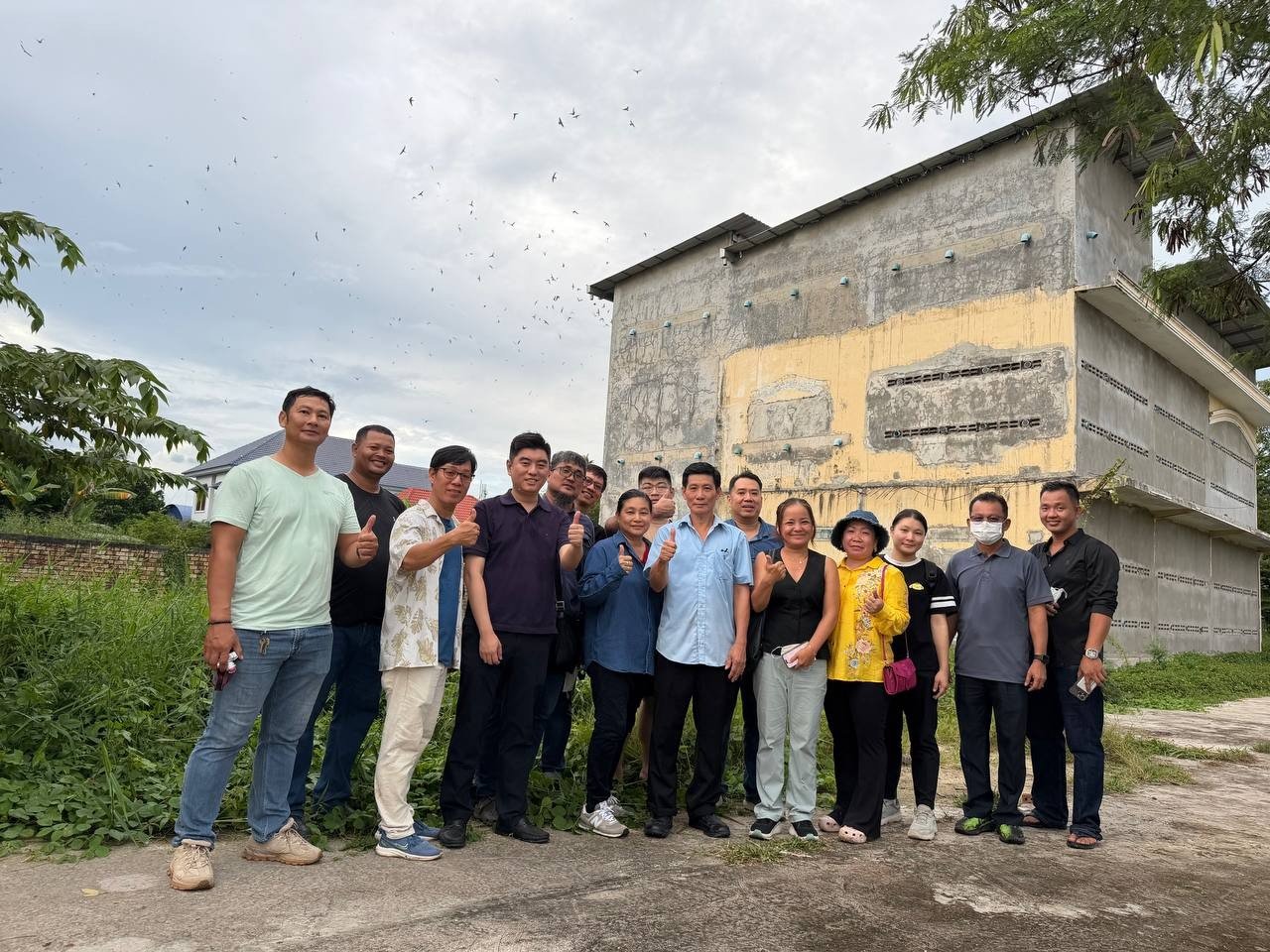
The house where we tuned on site was a different one. In that house, the external sound was far too loud. Standing behind the house on the ground, you cannot hear it, so it kept getting turned up. When it is that loud, the birds are scared and stay far from the entrance hole. Once it was turned down, on site the birds started coming closer.
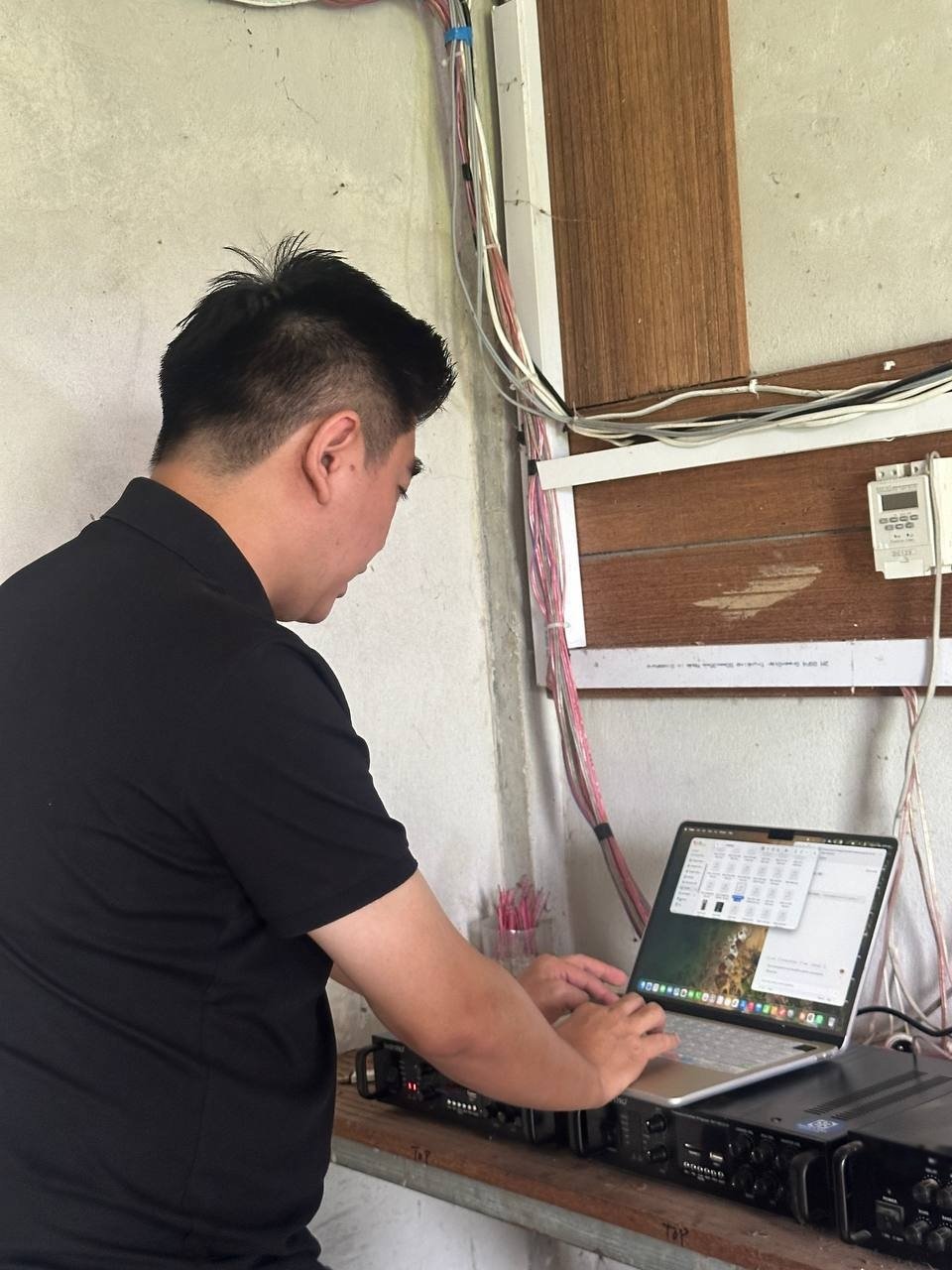
One more line I said there: tuned right means the birds go in and stay, not more birds outside. However busy it looks outside, it does not count until they stay.
Cambodia and Malaysia: what is the same
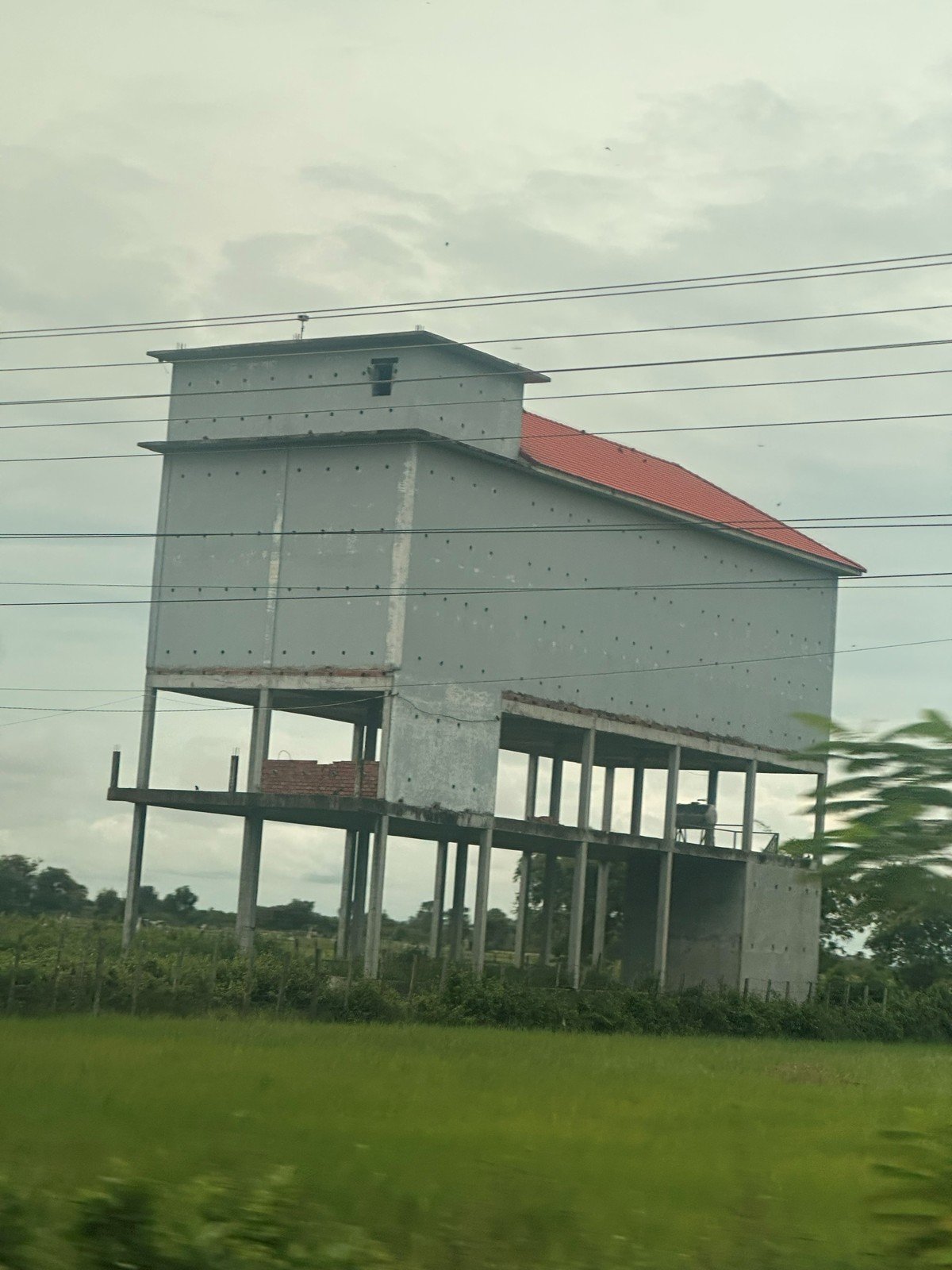
A few houses we passed looked very different from our shophouses: one stood on pillars, another sat in the middle of a field.
But the detours are the same. No birds, so change the sound. Then add tweeters. None of it starts by asking: where exactly are the birds stuck?
The order is the same too. First, can the birds get in? Then, where are they stuck? Then fix the most important point first. This is the MDK Swiftlet House Diagnosis Method: diagnosis first, prescription second.
We also went to Angkor Wat
On this trip a group of us also went to Angkor Wat, and took this photo there.

When equipment comes in
Equipment is not useless. It just comes later. Look at the entrance hole, the flight path, the nesting planks and the airflow first. When the Diagnosis Method gives a reason, then decide whether to change any equipment. On this trip, most of the calls on site were to take some away, not add more.
Your next step
Whether your house is in Cambodia or Malaysia, first film your way in from the entrance hole on your phone, talking as you go, and record the internal sound and then the external sound.
Send them to us on WhatsApp and I will help you see which layer the birds are stuck at. There is no charge and you do not need to buy anything first. After we look, if we need more information, we will ask you. You do not need to prepare everything at once.