

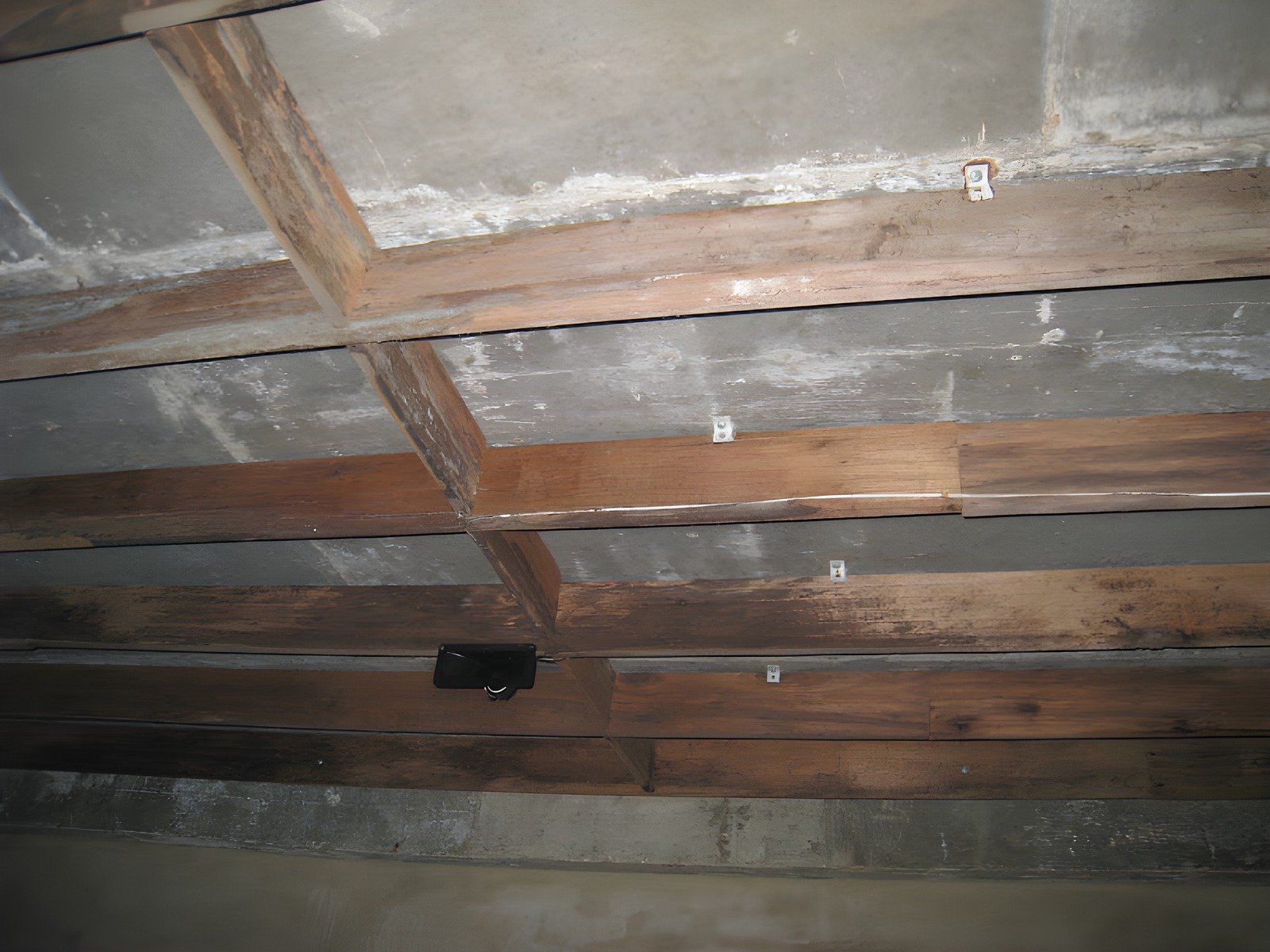
The aroma arrives. What’s the first thing most owners do?
Climb up and spray it on the nesting planks.
You can reach them, you can see the result, and the whole house smells of it after. It feels done.
That’s the action I’m asking you to stop.
First, to be clear: everywhere except the planks is fine
Everywhere in the house other than the nesting planks, you can still spray. The zone where the birds are thickest, the walls, the floor, and it does work. The only catch is that sprayed aroma doesn’t hang around long, so spraying alone won’t be enough and you’ll need a second way to make it last. The one place that must never be sprayed, start to finish, is the plank.
Sprayed aroma disperses faster than you think. That’s a limit of spraying, not a sign you did it wrong.
You may have seen what I wrote five years ago
In 2021 somebody asked why others spray air freshener on their planks while our NBH can’t be. What I said then:
No need to agonise over it, it can actually be sprayed on the planks, we just don’t encourage it.
I wrote that because I was worried you’d think NBH was toxic.
There’s plenty on the market sold as hormone with ammonia in it. Rushing to make clear our bottle isn’t that, I loosened something else.
Two separate statements. It is 100% natural and it is not toxic, true five years ago and still true. But not toxic doesn’t mean you should spray it.
Not “we don’t encourage it”. Don’t. Here are the two layers of cost I never spelled out.
Layer one: once a plank has been sprayed, you can’t wash it back
If you’ve been spraying hormone, EM or wood vinegar on your planks, and a fair bit of it, then the day you finally get serious about washing them, the colour comes back up layer by layer.
Not one wash. Many, and even then it’s a struggle.
Before Meranti+ Nesting Plank Enhancer existed, we cleaned planks by climbing up and wiping them one at a time with a cloth, roughly once every five years. That is a lot of work. Add a few years of your own spraying and it stops being a few extra wipes.
“Keep them clean” isn’t about this year. It’s about the next ten. What you spray on today for convenience is what a future version of you scrubs off.
Layer two: it comes straight off the price of your nests
Next harvest, turn a nest over and look at the face that was stuck to the plank. White, or yellow?
You know a yellow base doesn’t fetch a good price. What you may not have thought about: that colour came from the surface it sat on.
Cave nests make it obvious. Their base is red, and plenty of people call that blood. It isn’t. The cliff has minerals in it, those minerals rust, the nest sits on top, and the base gets stained red. The colour comes from the surface, not the bird.
Your planks don’t rust, but they’ll give it something else. Wrong wood, planks too soft so they hold water, a roof leaking, the mist machine running too long, planks going mouldy, nest bases not cleaned off properly last round, and one more: the things you sprayed on yourself.
Plenty of causes, and every one has to do with the surface the nest is sitting on. Clean face, clean base.
Most of that list comes down to the house and the weather. Only the last one is something you add with your own hand every month.
Where most people read it wrong: thinking a sprayed plank is “more thorough”
The logic runs smoothly. Birds live on the planks, so spray the planks.
It’s pointing the wrong way.
A bird meets the aroma along the route it flies in on. It circles outside the entrance, puts its head in, crosses that dark stretch, works toward the plank zone. The aroma has to sit along that whole route, drifting on the airflow, waiting for it.
Spray it on the plank and you’ve locked the aroma at the last place it gets to. For the whole journey before that, it smells nothing.
So where does it go? The zone where the birds are thickest. Walls and floor.
Adding the half that makes it last
Put a basin of hormone out and run an aquarium air pump into it so it bubbles and evaporates slowly. Put a timer on it. No need to run all day.
Where? Where the flock is thickest.
I know what you’re thinking. That zone already has plenty of birds, why bother?
That’s the point. You want those birds to smell it. Once they have, they go out and advertise for you, and bring friends back.
People have word of mouth. Birds have word of bird.
It doesn’t clash with spraying, it fills the gap spraying leaves. The sprayer handles “there’s aroma right now”. The basin handles “there’s always aroma”.
Two questions that come up every time
“Can I just pour it into the fogging machine?”
No, and the same goes for other humidifiers, ultrasonic units, and those misting nozzles at roadside food stalls. Four reasons. A fogger moves a lot of water, so it’s wasteful. It sprays too fast, so the aroma doesn’t last. It clogs easily and dirties the machine. And once the liquid inside is used up, there’s no aroma left.
“Can I spray on a rainy day?”
Also no. A wet day is damp already, and liquid on top still hasn’t dried when the birds come home. They’re uncomfortable, and the house picks up mould and fleas more easily.
Whatever you’re spraying, do it in the morning. Most of it will be dry before they’re back. Heat carries the aroma better anyway, the same way cooking smells stronger when it’s hot.
When aroma finally comes into it
Aroma is a helper. I’ve written that on Facebook more than once.
It helps swiftlets take to your house faster. It doesn’t turn a house they can’t get into a house they’ll live in. An entrance that doesn’t flow, light that dies inside, planks gone bad, aroma repairs none of that. Pour in the most expensive hormone you can buy and the birds still can’t get in.
I won’t tell you to finish a full round of the MDK Swiftlet House Diagnosis Method before you touch aroma. Do one thing you can manage today, see a little response, then we find the root together. That beats telling you to knock down a wall on day one.
One thing I want you to change: don’t spray the planks.
Your next step
Take two photos.
- At harvest, flip a nest over and shoot the face that was stuck to the plank
- Shoot the stretch of plank you’ve been spraying most often, close up
Send both over. How yellow that base has gone, and what’s built up on the plank, both show in a photo.
If you’ve been spraying for years, don’t panic. Just stop, and we’ll sort out the rest once I’ve seen the photos.