

People often ask me what I mean when I talk about a vertical shaft entrance.
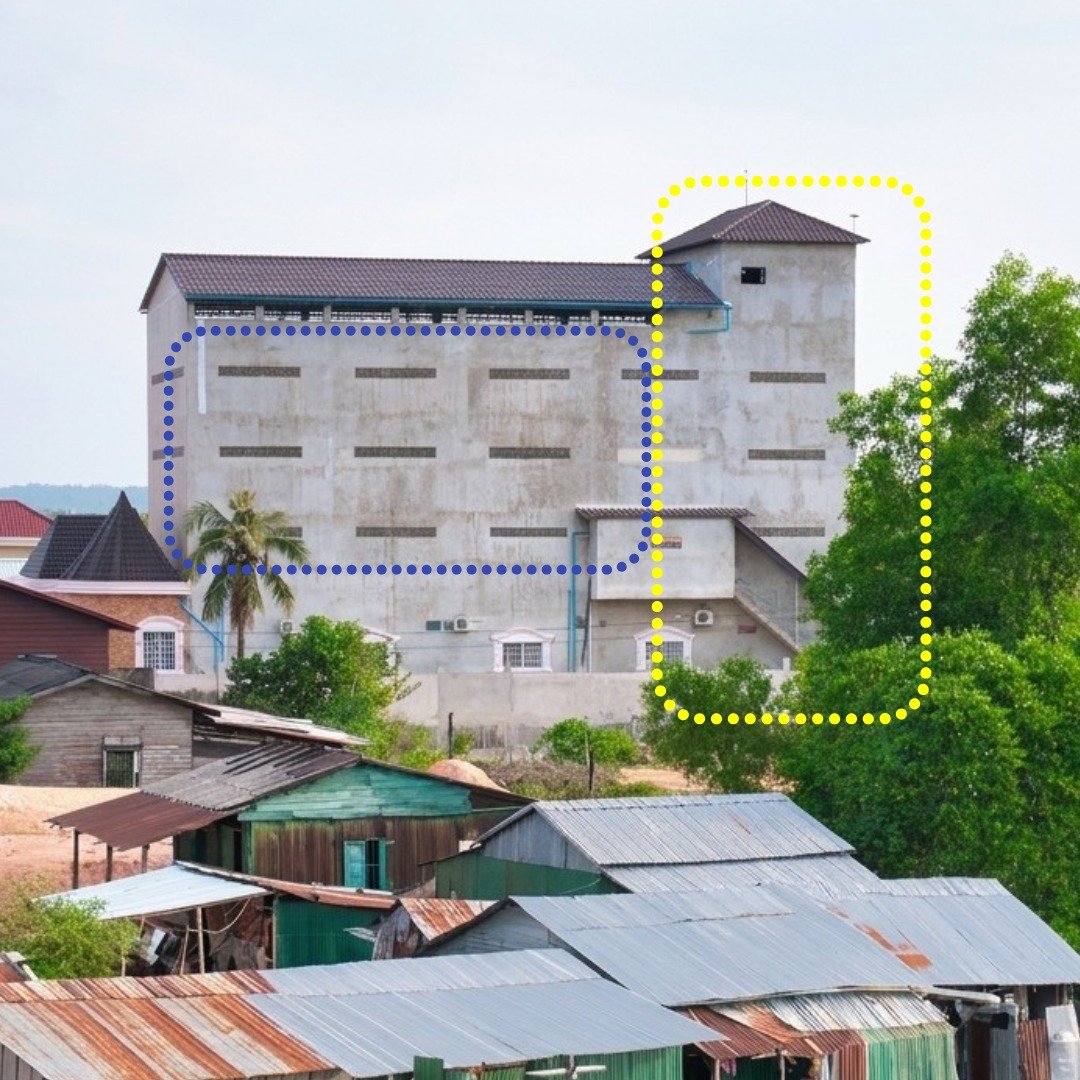
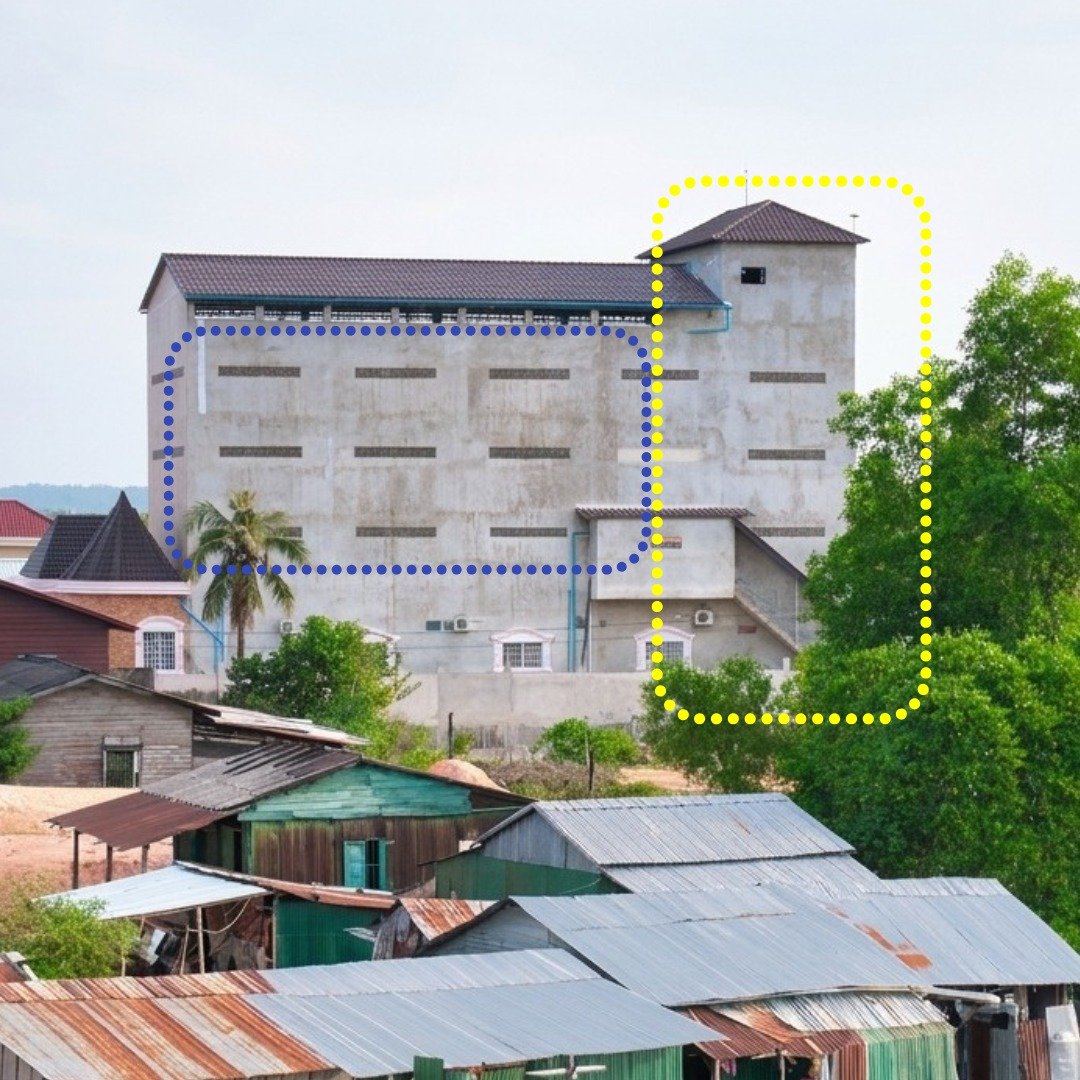
Put simply: once you come in through the entrance hole, everything from top to bottom is open, straight down. In the first photo below, the section circled in yellow is an entrance built this way.
If your house is designed like this, I want to make two things clear: whether swiftlets can fly smoothly in a house like this, and another problem that is common in these houses.
What this design is
A lot of swiftlet house design, and a lot of the names, came from Indonesia. There this kind of entrance is called liang naga. Liang means cave, so the name is probably something like dragon cave.
To be precise about what we mean: it is the passage that runs down from the entrance, with the roaming room open from the top floor to the bottom floor. It is not a separate well in the middle of the house.
Why people design it this way
A lot of people feel that opening it all the way lets air move through better, and that there is more light at the bottom.
Birds come in at the top and can fly straight down. Sounds convenient, right?
But the most important thing in swiftlet house design is how the birds fly. In most cases, airflow, light and the rest all have to be designed on the condition that the birds can fly through smoothly.
A swiftlet is a plane, not a helicopter
If you remember one line from this article, make it this one.
A swiftlet flies like a plane. It needs space, and it needs enough of an angle.
A vertical shaft suits the way a helicopter flies. A helicopter can go straight up and straight down. Swiftlets aren’t good at flying straight down, especially inside a building where space is limited. Flying like that is not natural for them.

What people usually get wrong
Birds upstairs means there’s no problem. If the upper floors are designed well, the birds may choose to stay on the higher floors. It looks like the house is working. But that is only avoiding the problem, not solving it.
The house is dry, so I’m not spraying enough. This one ties into the next problem.
Another common problem in these houses: airflow
The part circled in blue in the photo is rows of vent bricks. When we see an entrance like this, or ventilation like this, we can pretty much predict the house is likely to run into problems. The entrance we covered above. This one matters more.
Everyone knows swiftlets don’t like strong wind. How to control airflow is a different matter.
In a coastal area, or anywhere windy, ventilation like this lets outside air keep pouring into the house.
A lot of people in this situation add humidity and spray water, again and again. And they find it never gets damp enough. Why? Because the airflow keeps carrying the moisture away.
Over time the nesting planks start to grow mould, and early on you can’t see it. Not seeing it does not mean it is not there. Then the nests get dirty, production drops, and the birds slowly leave.
Houses in Malaysia have plenty of airflow problems too, just not as extreme as vent bricks. How we look at airflow as a whole is in swiftlet house ventilation.
The biggest problem is that you can’t see airflow. You can’t see it, so you assume it’s fine. By the time something goes wrong, it’s usually a production drop already, or an empty house.
What you can check yourself
Are the nests all upstairs? Go up and look in the daytime, after the birds have flown out. If they are, it might be the “avoiding the problem” picture above. It might also be something else. We’d only know after seeing it.
Is the mister running all the time and the house still isn’t damp enough? If yes, don’t rush to add another machine. Think first about where the wind is getting in.
Is the way from the entrance hole to the second entrance smooth? How the height of the entrance hole ties in with the second entrance (the second door that birds will pass through in your bird house) is in is a higher entrance hole better. If birds circle outside and won’t come in, read swiftlets circling the entrance but not going in.
Your house already has a shaft. Now what?
The house is already built. No need to lose heart. The job is to work out how to make the birds’ flight through your house smoother, especially once the bird count reaches a certain level, because by then the birds need an easier way through.
Where to start in your house, we only know after seeing it. What worked in someone else’s house can be wrong in yours, and that goes for your own other house that is doing well too. So don’t rush into building work.
When equipment comes in
First see whether the birds fly through your house smoothly and where the wind comes from. Then talk about what to put in or add. That is what the MDK Swiftlet House Diagnosis Method does. Diagnosis first, prescription second. Until we have seen your house, we won’t tell you to buy anything.
Your next step
In the daytime, after the birds have flown out, film your way in from the entrance hole on your phone, talking as you go, and record the internal sound and then the external sound.
Send it to us on WhatsApp. It’s free, and you don’t need to buy anything first. If we need more after watching, we’ll ask.
A swiftlet is a plane. Let it fly smoothly first, then worry about the rest.