

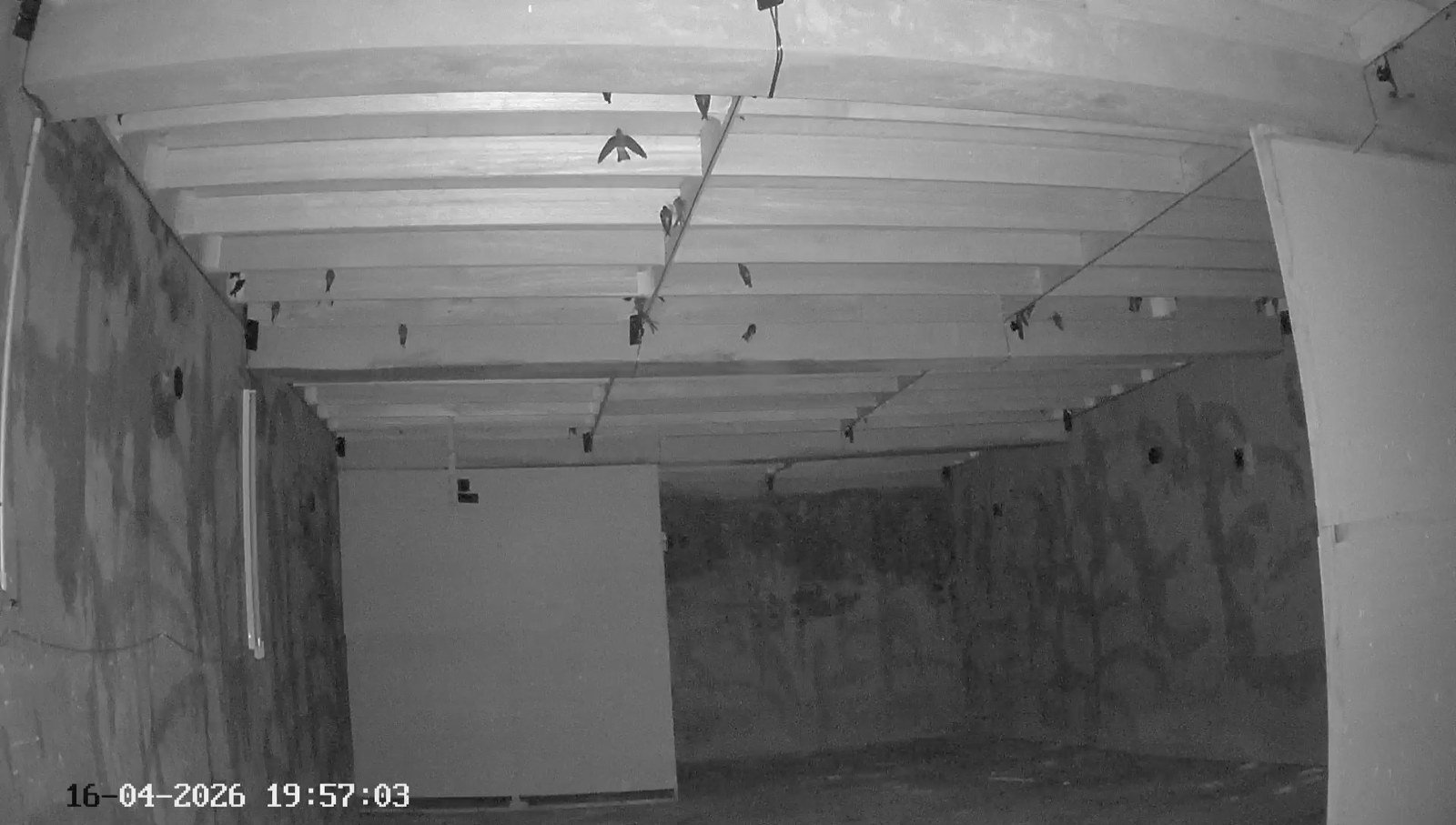
Some owners go up every day with a torch to count the birds on the planks. Others only open the door on harvest day. Both ask me the same thing: how often should I go in?
I do not have a number for you, because it does not exist. What matters is what you bring back from each visit.
What you are looking at
The house is far away and it sits on your mind. Stay out and you feel you are missing something. Go in and you cannot say what you saw: a few more birds, maybe a few less. You drive home more confused, and start thinking about changing something.
The usual mistake: the more you go in, the better you know the house
Often it is the other way round.
First, you are a disturbance. Lights on, climbing up and down, rushing: the adult birds inside feel all of it. We say the same about theft: the expensive part is not the nests taken that night, it is one careless person scaring the adult birds into leaving for good. Go in just as roughly and it applies to you too.
Second, every visit shows you today, while the birds are telling you about a period of time. Birds coming and birds staying are two different things, and staying cannot be seen in a day or two. Go in daily and you read the birds’ mood, not the house.
Third, you change something the moment you see something. A tweeter moved, then a plank, then a spray. Months later the birds have gone up or down and you cannot say which change did it.
Going in only on harvest day is also wrong. The house keeps changing while you are away, and by harvest day you have missed every sign.
So the question is not how often. It is what you are going in to look at.
What you can see without going in
If there is already a camera in your house, use it. It is the easiest pair of eyes you have, there even on the days you are not.
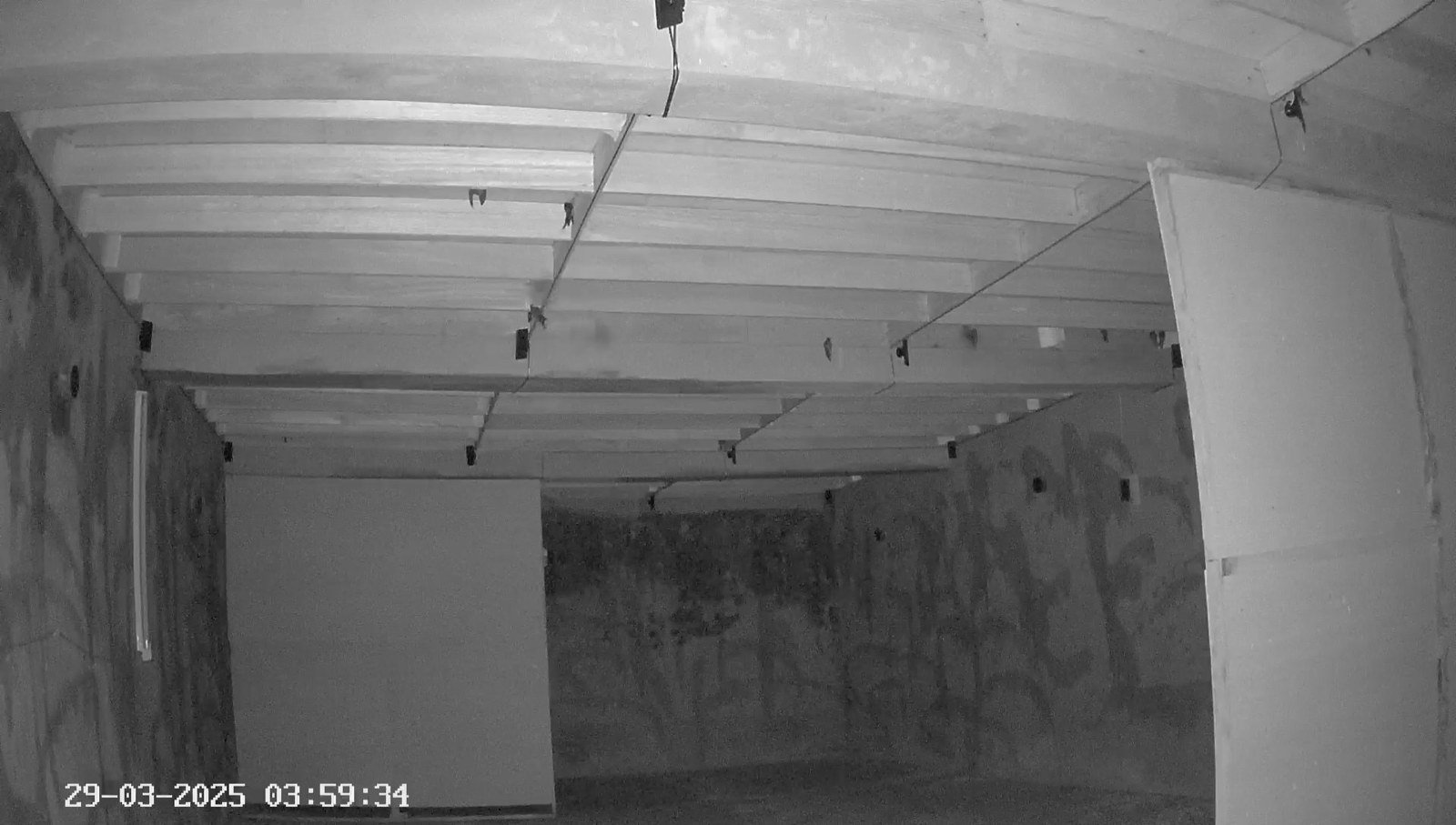
Decide what you want to see first. If your camera can see both the first entrance (the hole the birds fly in from outside) and the second entrance (the second door that birds will pass through in your bird house), watch whether the birds turn around there and fly out again, or go straight in. If it faces the nesting plank area, watch whether the birds settle onto the planks or make one loop and leave.
The birds worth watching are the new ones. Kiew Meng Kui, who teaches the Swiftlet Signature Masterclass (SSM) with me, puts it simply: old birds have seen it all and do not care about much, it is the new birds that are choosy. In the first few days after new birds arrive, do they move around inside together as a group, or do they break up one by one and lose interest? The camera shows you that clearly, and you never set foot inside.
When you do go in, check these
Do not come out empty handed. Check the same few things and photograph the same few spots every time.
1. Droppings on the walls, in two directions. Droppings on the wall outside the entrance mean the birds are being pushed back on the way in. Droppings on the wall inside the entrance mean the way out is blocked. A house that works smoothly has clean walls. No droppings is a good reading in itself.
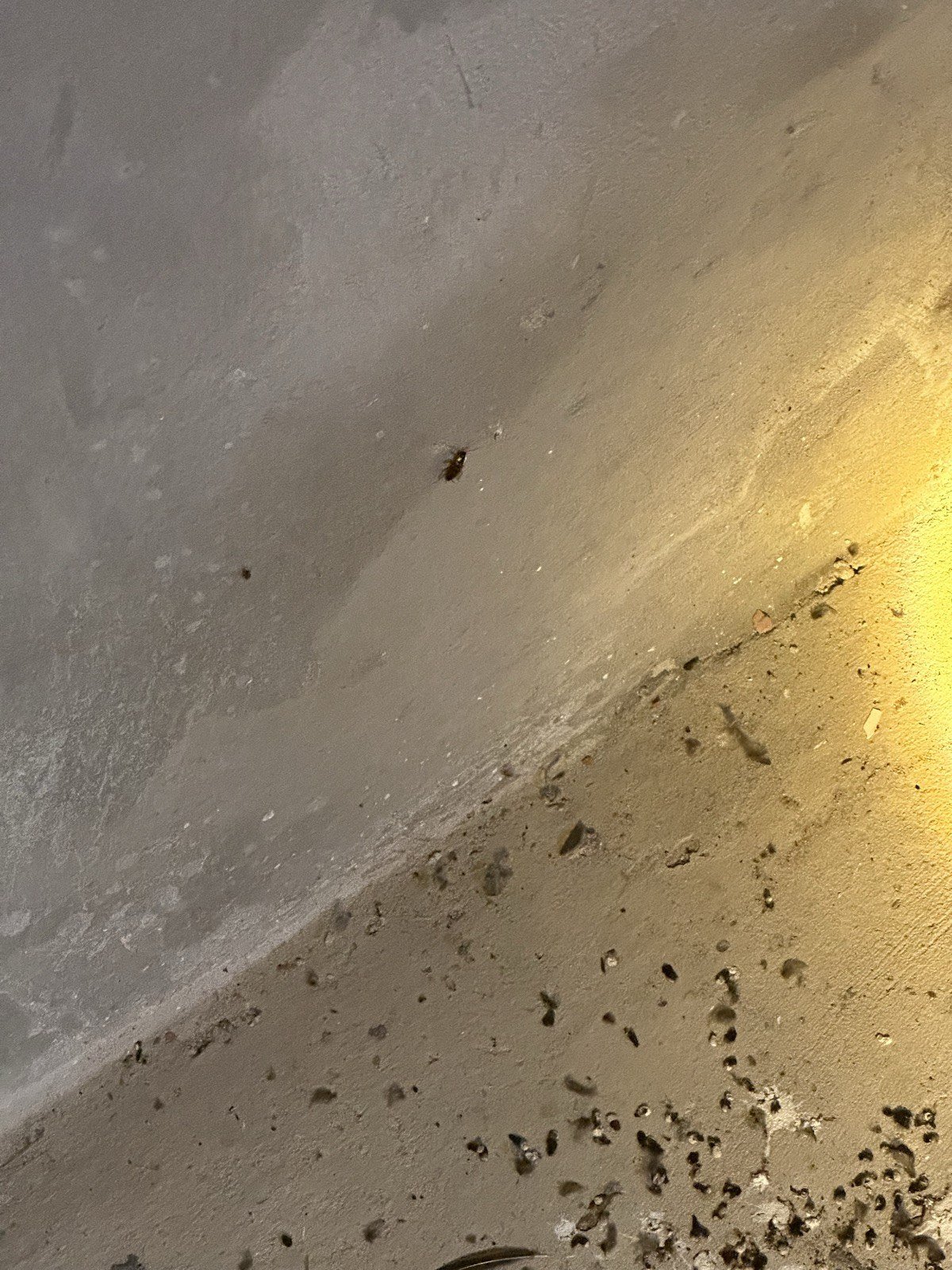
2. Piles on the floor, and what is above them. Droppings usually land right under the spot where a bird got stuck or stopped.
3. Nests of mixed sizes, or all the same. Mixed sizes mean new birds keep joining and starting their nests at different times. That kind of house grows. All the same size, and after harvest you wait for the next round, means new birds have stopped coming in.
4. Nests around each tweeter. If there are nests all around but one tweeter spot stays empty, write that spot down. When the birds accept everything nearby and avoid just that one place, they are telling you something is wrong there.
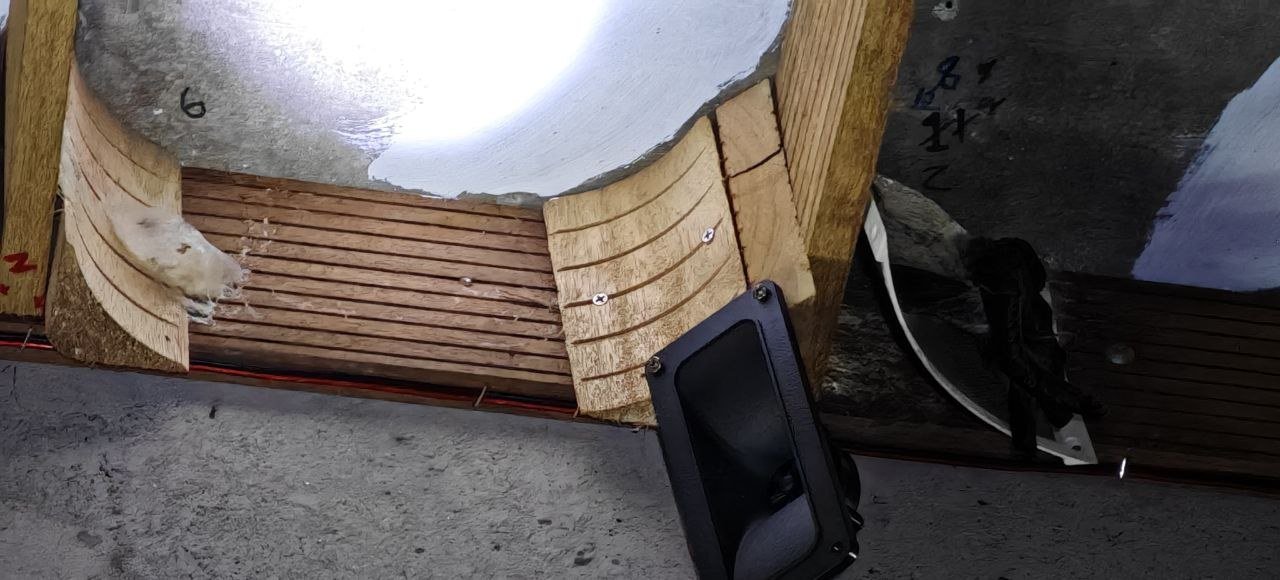
5. Stand on the floor and record the sound inside. A little away from the wall, with your phone. That is all.
Next time, shoot from the same place and the same angle. Two photos side by side beat your memory.
The rhythm follows what you changed
This is the real answer to “how often”. It depends on what you just touched.
If you changed the sound or where a tweeter sits, you will see the birds react within the same day or a few days. That is when the camera is most useful. If you worked on the planks, washing or spraying, wait longer before you go back and look for new nest bases. If you changed partitions or the flight path, wait a few months, then go back and read the droppings on those walls.
Before you change anything, wash the wall you plan to watch. If you do not, you will not know whether the droppings you see later are old or still happening.
Change one thing at a time. When you get home, write it down: the date, and what you changed. Kiew Meng Kui says he did not know much either at the start. What got him there was writing a record after every change. What you saw, you will see again next visit. What you changed, you will forget.
While birds still live in the house, do not make a big change all at once. Go in steps.
When equipment comes in
Whether to change the sound or clean the planks comes after you have read these signs, not before. Only when the planks really are dirty do they need washing, and for that we use our own Meranti+ Nesting Plank Enhancer. If your house has been stuck at one number for years, I wrote about the common directions in Swiftlet house stuck at the same number for years. For how to read the planks, see Swiftlets nesting on the walls, not the planks.
That is the road the MDK Swiftlet House Diagnosis Method takes: diagnosis first, prescription second. Read the signs clearly, then decide what to touch. After you touch it, watch how the birds answer.
Your next step
On your next visit, photograph these: the walls just inside and just outside the entrance, the biggest piles of droppings on the floor and what is above them, and one tweeter that has never had a nest along with the area around it. Add a recording of the sound inside, taken standing on the floor. If you have a camera, a short clip of birds coming in at dusk helps too.
Send them to us on WhatsApp and I will tell you what those signs are saying, and help you plan when to go in next and what to look at. There is no charge and you do not need to buy anything first. After we look, if we need more information, we will ask you. You do not need to prepare everything at once.