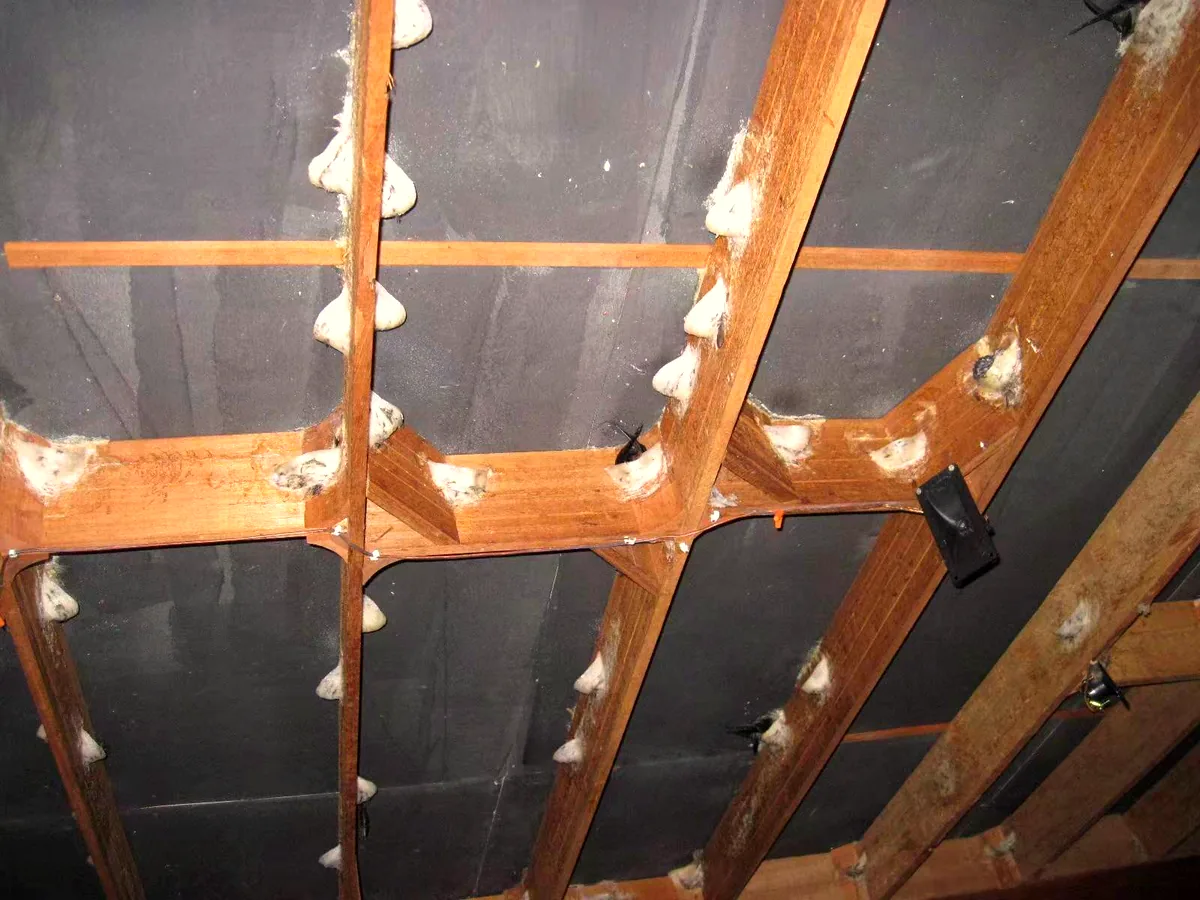
What the diagnosis looks at.
The order cannot be shuffled.
A diagnosis is not a checklist. It has an order. If the first layer fails, everything after it is meaningless.
The entrance
The entrance level, angle and light. First, how to count them: the hole birds fly in from outside is the entrance hole. The first door they meet once inside is the second entrance (the second door that birds will pass through in your bird house). If your house has an air well, the air well counts as the entrance hole.
The level line means this: standing at the second entrance, at some angle you should be able to see the entrance hole. It's not just about height, side-to-side offset counts too. When the two holes are misaligned, whether up-down or side-to-side, birds have to make a hard turn on the way in. If you can see through, that stretch flies straight.
Angle is the slope from the entrance hole to the second entrance, and it's tied to distance. Too narrow doesn't work. Too steep doesn't work. Too long doesn't work. Too wide doesn't work either. All four pull against each other. You can't lengthen the distance to make up for a bad angle.
Light is actually three separate things to look at: natural daylight, whether the setting sun shines straight in (not hard to fix, just design the second entrance's position around it; what matters is the window when birds come home, when every other house has already gone dim and yours is still bright), and any lighting you install yourself (before installing anything, ask: is it to keep predators out, to attract insects, or to attract birds?). Too dark, and birds need more time to feel their way in, because they're scared.
Swiftlets fly fast. If getting in requires an awkward, forced move, they'd rather not come in at all. So until birds can glide in smoothly, airflow, temperature and humidity mean nothing yet. This is the layer almost no swiftlet house has ever had checked.

Flight path and nesting planks
Getting in is one thing. Staying is another. Is the flight path smooth? Is there enough runway? Are the planks aged or moldy? Think of a bird coming home like a plane landing: it needs a stretch of distance to touch down. If the entrance is too steep, the flight path becomes effectively too short, and the plane can't land. (Some people call this the runway, that's airport language. The correct term is flight path.) You can skip a harvest, but you must never neglect your planks.
Airflow, temperature, humidity, sound coverage
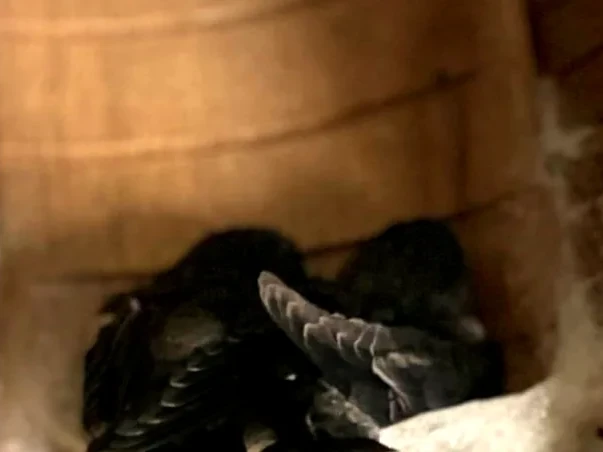
If airflow is too strong, swiftlets avoid it, and the way they avoid it is by building nests as high as possible, tucked behind the plank, so the nest's position is itself the answer. Completely still air is what we call “dead airflow”, no fresh air, and the colony grows to a certain size then stalls. Temperature and humidity are a different matter: a gauge on the wall doesn't measure the layer where the birds actually live, moist air doesn't rise, and height, temperature swings and wind speed all skew the reading. So we look at the site, not the gauge. Sound coverage tells the same story: birds not nesting in front of the tweeter, birds avoiding the tweeter, or birds nesting behind the tweeter, all three are signs something is wrong.
Only now do we reach the things everyone loves to discuss. Not because they don't matter. Because they come last. If the first two layers fail, every ringgit you spend on this layer is wasted.